










What's Happening?
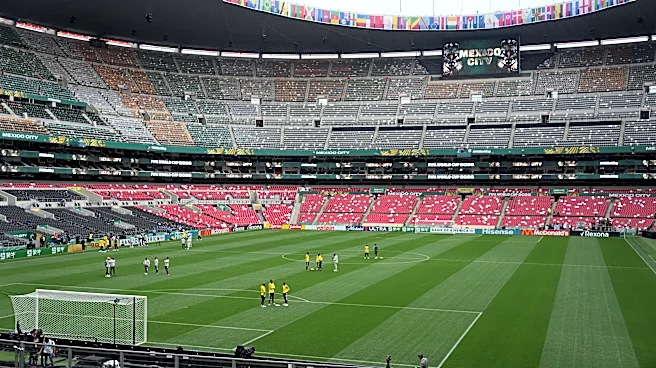
In a creative law enforcement operation, Peruvian police officers disguised as World Cup mascots successfully arrested a suspected drug dealer in Lima. The operation took place during the opening match of the World Cup between Mexico and South Africa.
The suspect, Carlos Cabrera, was apprehended with the help of officers dressed as Clutch, a bald eagle representing the United States, and Maple, a moose representing Canada. This approach was part of a strategy to capitalize on the suspect's enthusiasm for the World Cup, allowing officers to approach him without raising suspicion. During the raid, police discovered 2,524 packets of cocaine base and a firearm. The operation is part of a broader trend in Peru where law enforcement uses creative disguises to catch criminals, including previous instances involving costumes of fictional characters like the Grinch and Santa Claus.
Why It's Important?
This operation highlights the innovative tactics employed by law enforcement in Peru to combat drug trafficking. By using disguises, police can effectively approach and apprehend suspects who might otherwise evade capture. The success of such operations could inspire similar strategies in other regions facing challenges with drug-related crimes. The arrest of Carlos Cabrera, a significant figure in the local drug trade, could disrupt the supply chain and reduce the availability of illegal substances in the area. This approach also underscores the importance of intelligence work in identifying and targeting key individuals within criminal networks. The use of World Cup mascots specifically taps into cultural events to enhance the effectiveness of police operations, demonstrating adaptability and resourcefulness in law enforcement strategies.
What's Next?
Following the arrest, the legal proceedings against Carlos Cabrera will likely focus on the charges related to drug trafficking and possession of illegal firearms. The case may set a precedent for the use of unconventional methods in law enforcement, potentially leading to broader acceptance and implementation of such tactics. Additionally, the success of this operation could encourage further collaboration between law enforcement agencies and cultural institutions to develop innovative crime-fighting strategies. As the World Cup continues, there may be increased vigilance and similar operations targeting other suspects who might be distracted by the event. The broader impact on drug trafficking in Peru will depend on the ability of law enforcement to sustain these efforts and address the root causes of drug-related crime.