








What's Happening?
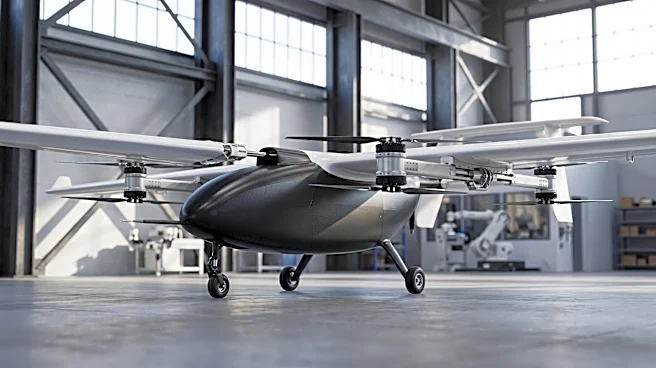
Louisiana has become the tenth state, and the first in the federal eVTOL Integration Pilot Program, to conduct an uncrewed aircraft test flight. In late August 2026, Elroy Air performed a week of autonomous, uncrewed Chaparral cargo flights from Houma-Terrebonne
Airport under air traffic control. The FAA announced these as the first remotely piloted aircraft test flights under the national program, following earlier crewed flights in Virginia. The cargo transported included medical supplies, spare parts, food, and water for offshore operations. The FAA's pilot program now spans four states—Louisiana, Oklahoma, Mississippi, and Texas—and includes MSU, Teros, BETA, and Elroy Air as partners. Despite the state having an Advanced Aeronautics Director and a Vertiport Development Fund established in 2024, the fund has not received any appropriations. Furthermore, the state's announcement of its federal selection explicitly stated that the federal government would not provide funding through this program.
Why It's Important?
This uncrewed test flight in Louisiana marks a significant step forward for the integration of advanced air mobility (AAM) and drone technology in the U.S., particularly for cargo delivery. The focus on offshore freight highlights a practical application for eVTOLs in supporting critical industries like energy production in the Gulf of Mexico, where approximately 15,000 people are flown to offshore locations monthly. The involvement of Elroy Air and its partners, along with the FAA's pilot program, demonstrates a concerted effort to develop and validate operational procedures for remotely piloted aircraft. However, the lack of state funding for its Vertiport Development Fund and the absence of federal financial support for the program raise questions about the long-term sustainability and scalability of such initiatives. While the industry is moving forward with letters of intent and orders for aircraft, the financial commitment from state and federal entities appears to be lagging, potentially hindering infrastructure development and broader economic impact within Louisiana.
What's Next?
Elroy Air's merger registration took effect on November 5, 2026, with a shareholder vote scheduled for November 25, and Bristow now holds 15 early delivery positions for the Chaparral. This indicates a move towards commercialization and expansion of operations. The FAA's eVTOL Integration Pilot Program will likely continue to expand its testing and validation efforts across the participating states, gathering crucial data for future regulatory frameworks. For Louisiana, the challenge will be to secure funding for its Vertiport Development Fund to support the necessary infrastructure for advanced air mobility. The state has not yet published an advanced air mobility economic forecast, which would be essential for attracting further investment and planning. The success of these pilot programs could pave the way for wider adoption of uncrewed cargo flights, potentially transforming logistics and supply chains for remote and offshore locations across the U.S.
Beyond the Headlines
The disparity between technological advancement and financial/regulatory support in Louisiana's eVTOL program underscores a broader challenge in the U.S. advanced air mobility sector. While the FAA is actively facilitating test flights and integration, the absence of dedicated funding mechanisms at both state and federal levels could create bottlenecks for infrastructure development and operational scaling. This situation highlights the need for a more cohesive national strategy that aligns regulatory progress with financial incentives and infrastructure planning. The reliance on private investment and industry partnerships, while crucial, may not be sufficient to build out the extensive network required for widespread AAM adoption. Furthermore, community engagement and addressing concerns related to noise, privacy, and airspace congestion will be vital for gaining public acceptance, as demonstrated by past challenges in other drone operations. The long-term success of eVTOLs in the U.S. will depend on a balanced approach that integrates technological innovation with robust policy, funding, and community support.