




What's Happening?
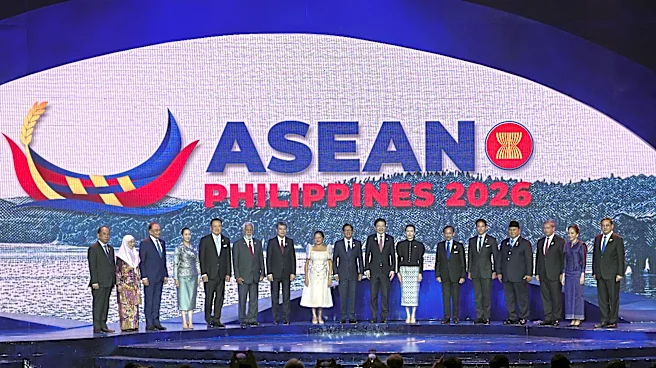
ASEAN, the East Asia Summit (EAS), and APEC, while serving as crucial platforms for dialogue and cooperation in the Asia-Pacific, are struggling to move beyond symbolic discussions to concrete implementation. ASEAN's 'ASEAN Way,' characterized by consensus
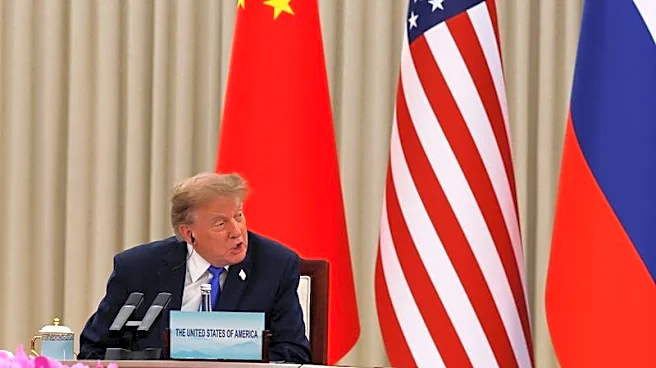
and non-interference, allows diverse nations to remain within a single framework but often hinders decisive collective action. The organization's authority is also dependent on major powers respecting its centrality. The EAS, ASEAN’s principal leaders-level strategic forum, brings together major powers like the U.S., China, and Russia, providing a venue for strategic reassurance amidst maritime disputes and technological competition. However, its outcomes are largely declarations rather than binding agreements, and great-power competition often turns it into a forum for competing narratives. APEC, the broadest economic forum, promotes trade and investment liberalization but lacks enforcement power, with compliance remaining voluntary. All three institutions face the dilemma that their inclusive, consensus-based design, while sustaining participation, limits their capacity for decisive action, leading to a regional architecture that is broad but often shallow.
Why It's Important?
The limitations of ASEAN, EAS, and APEC in translating dialogue into delivery have significant implications for regional stability and economic integration. The inability to enforce agreements or take decisive collective action means that critical issues such as maritime disputes, supply-chain resilience, digital trade, and climate-related cooperation may not be adequately addressed. This can lead to prolonged uncertainties, increased tensions, and missed opportunities for economic growth and development. For the U.S., the effectiveness of these forums is crucial for managing strategic competition with China and Russia, ensuring open communication channels, and promoting its economic interests in the region. If these institutions become merely ceremonial, the region risks losing indispensable instruments for maintaining order and addressing complex challenges, potentially leading to a more fragmented and less predictable geopolitical landscape. The lack of strong regional mechanisms could also force individual nations to rely more heavily on bilateral agreements, potentially exacerbating existing power imbalances.
What's Next?
The immediate challenge for ASEAN, EAS, and APEC is to enhance their credibility by improving implementation and reducing internal divisions. For ASEAN, this means strengthening internal cohesion and ensuring that rhetoric translates into tangible results, particularly in economic integration and policy coordination. The EAS needs to evolve beyond symbolic dialogue to become a more effective venue for managing strategic competition and fostering genuine cooperation among major powers. APEC must recover its practical economic role, focusing on areas like supply-chain resilience, digital trade, and climate-related cooperation, by finding ways to encourage greater commitment and follow-through from its members. The region does not need new institutions but rather existing ones to work more effectively. The future relevance of these forums hinges on their ability to move from issuing communiqués to delivering concrete outcomes, thereby proving their indispensability in a region demanding practical answers to complex challenges.
Beyond the Headlines
The inherent 'ASEAN Way' of consensus and non-interference, while fostering inclusivity, also highlights a fundamental tension between sovereignty and collective action in international relations. This dynamic is not unique to Southeast Asia but is particularly pronounced in a region with diverse political systems and external alignments. The struggle of these institutions to enforce commitments reflects a broader challenge in global governance, where national interests often supersede multilateral agreements. The increasing great-power rivalry further complicates this, as major powers may use these forums to advance their own narratives rather than seeking common ground. This situation could lead to a 'multilateralism of convenience,' where cooperation occurs only when it aligns perfectly with individual national interests, undermining the potential for robust regional solutions to shared problems. The long-term implication is a potential erosion of trust in multilateral institutions and a shift towards more bilateral or minilateral arrangements, which could further fragment the regional order.