
What's Happening?
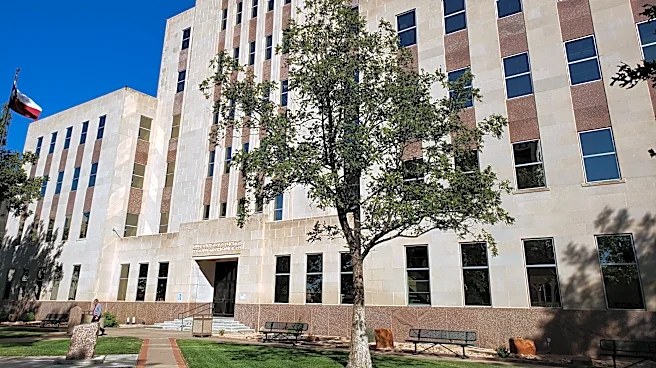
Midland County Judge Terry Johnson has been suspended from office with pay by the State Commission on Judicial Conduct, effective August 26, 2026. This suspension follows his indictment by a Midland County grand
jury on criminal charges related to a Facebook post. The post allegedly contained a resident's personal identifying information, including their Social Security number and date of birth, alongside a caption reading 'Convicted felon trying to be a player.' Johnson has acknowledged posting the document but claims he was unaware of the sensitive personal information it contained. He was indicted on two counts of Misuse of Official Information and one count of Fraudulent Use or Possession of Identifying Information, both third-degree felonies, and one count of Abuse of Official Capacity, a Class A misdemeanor. Johnson has pleaded not guilty, and his attorney states he never intended to cause harm.
Why It's Important?
The suspension of a county judge on felony charges is a significant event that underscores the accountability of public officials, even those in judicial roles. This case highlights the serious legal ramifications of misusing official information and the potential for public officials to face criminal charges for actions taken, or perceived to be taken, in their official capacity. The incident also brings to light the vulnerability of personal identifying information, especially when handled by government entities, and the potential for its misuse. The ongoing legal proceedings, including a separate civil lawsuit seeking Johnson's removal from office and a federal civil rights suit from the affected resident, demonstrate the multi-faceted legal avenues available to address alleged misconduct by public servants. This situation could lead to increased scrutiny of data handling protocols within government offices and a re-evaluation of ethical guidelines for public officials' online conduct.
What's Next?
Judge Terry Johnson remains suspended with pay while the criminal case proceeds, with his attorney indicating that a jury trial could be months away. The suspension is an interim, protective measure and does not constitute a finding of guilt; it will lift if the charges are dismissed or he is acquitted. In parallel, a civil lawsuit filed by Midland County District Attorney Glenn Harwood seeks Johnson's permanent removal from office, a separate legal process from the criminal charges. Additionally, the resident whose information was allegedly posted has filed a federal civil rights lawsuit seeking damages. These multiple legal tracks mean that Judge Johnson faces a prolonged period of legal challenges and uncertainty regarding his future in public office. The outcomes of these cases will set precedents for how similar allegations against public officials are handled in Texas and potentially beyond.
Beyond the Headlines
This case extends beyond the immediate legal implications for Judge Johnson, touching upon broader themes of digital ethics, privacy rights, and the conduct of public officials in the age of social media. The alleged misuse of official information for personal or retaliatory purposes raises profound questions about the trust placed in government officials and the safeguards in place to protect citizens' data. The incident underscores the evolving challenges of maintaining professional boundaries and ethical standards in a digitally connected world, where personal and official lives can easily intersect. The public's reaction and the legal outcomes will likely influence future policies regarding data privacy, official conduct, and the use of social media by those in positions of power, potentially leading to more stringent regulations and greater public demand for accountability from elected officials.