



What's Happening?
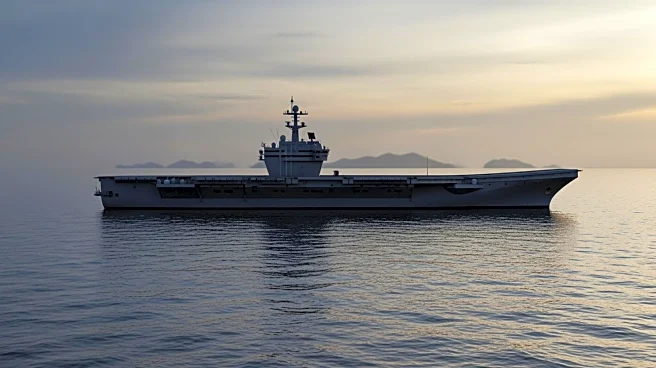
Japan's Defense Ministry reported that a Chinese aircraft carrier, CNS Liaoning, concluded a weeklong deployment near Japan's southwestern islands in the Pacific Ocean. The deployment involved the Liaoning, along with its escorting ships and fighter jets,
operating in waters south of Japan's main islands. During this period, the Liaoning conducted 260 takeoffs and landings of fighter jets and helicopters in the Philippine Sea. The Chinese navy described the deployment as a routine training exercise, while Japan's Self-Defense Forces monitored the activity closely. This deployment comes amid heightened tensions between China and Japan, particularly concerning Taiwan, a self-ruled island near Japan that China claims as its territory.
Why It's Important?
The presence of the Chinese aircraft carrier near Japan underscores the ongoing military tensions in the region, particularly between China and its neighbors, including Japan, a key U.S. ally. This deployment is part of China's broader strategy to expand its military reach and influence in the western Pacific. The situation is further complicated by Japan's recent remarks about potential military intervention if China were to blockade Taiwan. The deployment highlights the strategic importance of the region and the potential for military confrontations, which could have significant implications for regional security and U.S. interests.
What's Next?
It remains uncertain whether China will conduct another aircraft carrier deployment in the Philippine Sea before the year's end. The U.S. maintains a military presence in the region, with two aircraft carriers stationed there, although one has recently returned to base. The ongoing military activities by China and the responses from Japan and the U.S. suggest that the region will continue to be a focal point for military and diplomatic tensions. Future deployments and military exercises by China could further strain relations and prompt additional responses from Japan and its allies.