

What's Happening?
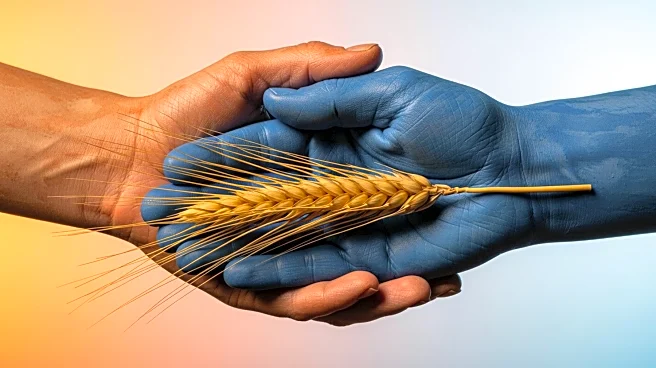
India and the United States have announced an interim bilateral trade agreement focusing on agricultural imports. The agreement does not open India's market to imports of soyabean, corn, fuel ethanol, cotton, or dairy and poultry products from the US.
Instead, India will grant greater market access by reducing tariffs on other American farm products such as Distiller’s Dried Grains with Solubles (DDGS), soyabean oil, red sorghum for animal feed, tree nuts, fresh and processed fruits, wine, and spirits. The agreement aims to benefit India's livestock sector by providing cheaper and better-quality DDGS from the US, which is derived from genetically modified corn. The US is a major producer and exporter of corn, ethanol, and DDGS, and the agreement could impact Indian soyabean farmers and the processing industry due to potential changes in domestic realizations on soyabean DOC and oil.
Why It's Important?
The trade agreement between India and the US is significant as it could reshape the agricultural import landscape in India. By allowing imports of DDGS and reducing tariffs on soyabean oil, the agreement may lower costs for India's livestock sector, benefiting poultry, dairy, and aqua industries. However, it poses challenges for Indian soyabean farmers and processors, who may face reduced domestic realizations. The agreement also highlights India's stance on genetically modified crops and dairy products, which remain restricted. The potential increase in imports of American agricultural products could affect local industries and farmers, necessitating adjustments in domestic agricultural policies and practices.
What's Next?
The agreement's impact on Indian agriculture will depend on how domestic industries adapt to the changes in import tariffs and market access. Stakeholders in the livestock sector may benefit from cheaper feed ingredients, while soyabean farmers and processors may need to explore alternative markets or adjust production strategies. The agreement also opens discussions on non-tariff barriers to US food and agricultural products, which could lead to further negotiations on genetically modified crops and dairy imports. Monitoring the agreement's implementation and its effects on local industries will be crucial for policymakers and industry leaders.