






What's Happening?
A team of scientists from the CHIME/FRB Collaboration, led by researchers at MIT, has developed a novel method to detect missing galactic matter by analyzing fast radio bursts (FRBs). These bursts, which are bright, millisecond-long flashes of radio waves,
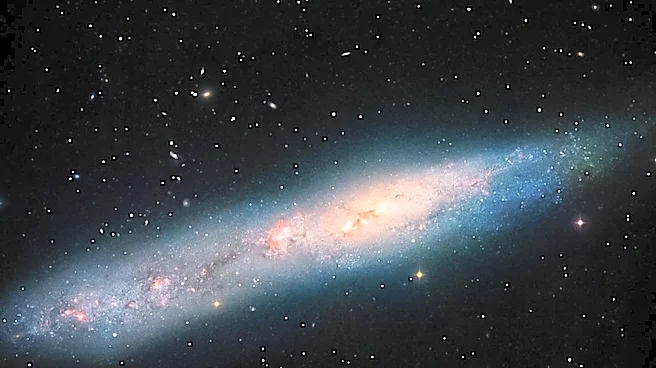
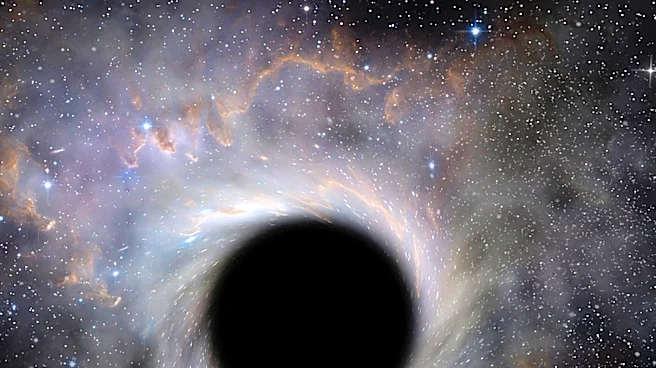
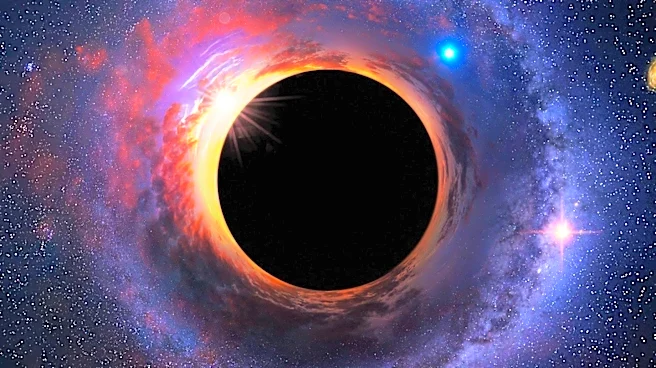
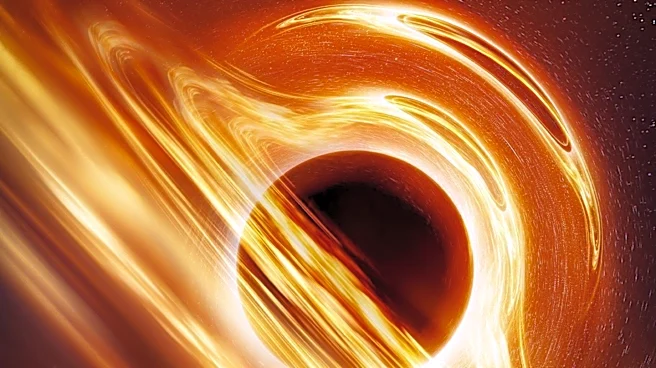
have been used to identify previously unseen matter in the vast spaces between galaxies. The study, published in the journal Physical Review Letters, reveals that this matter, originating from within galaxies, is expelled by violent astrophysical phenomena such as black hole jets and exploding stars. The findings suggest that these events are more energetic than previously thought, pushing matter far beyond galactic boundaries.
Why It's Important?
This discovery is significant as it addresses a long-standing puzzle in astrophysics regarding the discrepancy between the expected and observed amounts of ordinary matter in the universe. By identifying the missing matter in intergalactic space, the study provides insights into the dynamics of galaxies and the forces at play within them. The research also highlights the potential of FRBs as a tool for probing cosmic phenomena, offering a new method for studying the universe's structure and evolution. This could lead to a better understanding of the universe's composition and the processes that shape it.
What's Next?
The CHIME/FRB team plans to refine their method and improve the precision of their results as more data becomes available. With CHIME continuing to detect additional FRBs, the researchers anticipate further advancements in their ability to map the distribution of matter in the universe. This ongoing research could lead to new discoveries about the nature of galaxies and the forces that influence their behavior, potentially reshaping our understanding of cosmic phenomena and the universe's evolution.