









What's Happening?
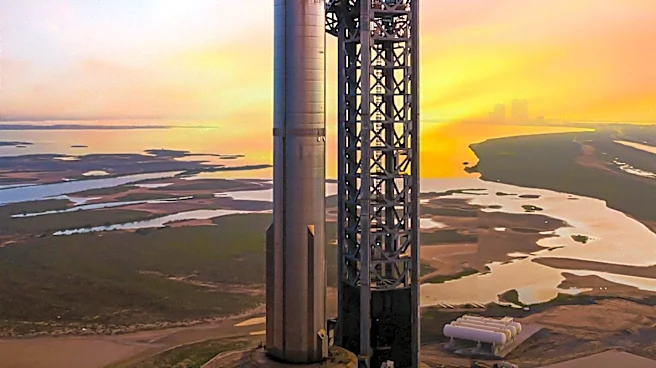
SpaceX is gearing up for the 13th test flight of its Starship rocket, scheduled for July 16, with a 90-minute launch window starting at 6:45 p.m. EDT. This mission will feature the Starship Version 3 (V3) rocket, an enhanced model with increased power
compared to previous versions. The launch will deploy 20 upgraded Starlink V3 satellites, six of which are equipped with cameras to monitor the rocket's heat shield during flight. The Federal Aviation Administration has approved the launch following an investigation into a previous test that ended in an explosion. The Super Heavy booster has been moved back to the hangar for final checkouts before being restacked with the Starship upper stage at Starbase, Texas.
Why It's Important?
The upcoming launch is significant for SpaceX as it continues to refine its Starship design, which is crucial for future missions to the Moon and Mars. The deployment of upgraded Starlink satellites also represents a step forward in enhancing global internet coverage. Successful execution of this mission could bolster SpaceX's reputation and reliability in the commercial space industry, potentially attracting more clients and contracts. Additionally, the advancements in Starship technology could have broader implications for space exploration, reducing costs and increasing the feasibility of long-term human presence on other celestial bodies.
What's Next?
Following the launch, SpaceX will likely analyze the performance of the Starship V3 and the deployed satellites to inform future missions. The company may also conduct additional engine tests and system upgrades based on the data collected. Stakeholders, including NASA and commercial partners, will be watching closely to assess the viability of using Starship for upcoming lunar and interplanetary missions. The success of this launch could accelerate SpaceX's timeline for achieving its ambitious goals in space exploration.