



What's Happening?
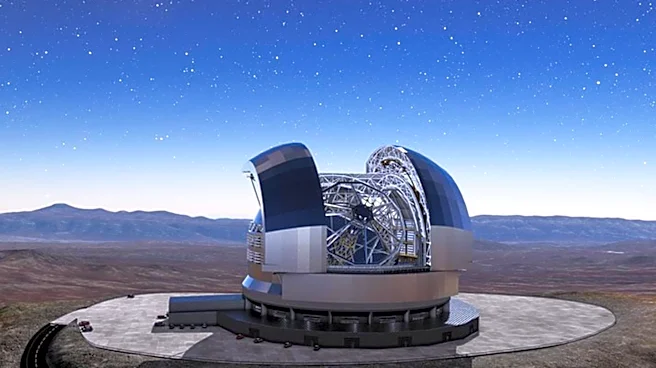
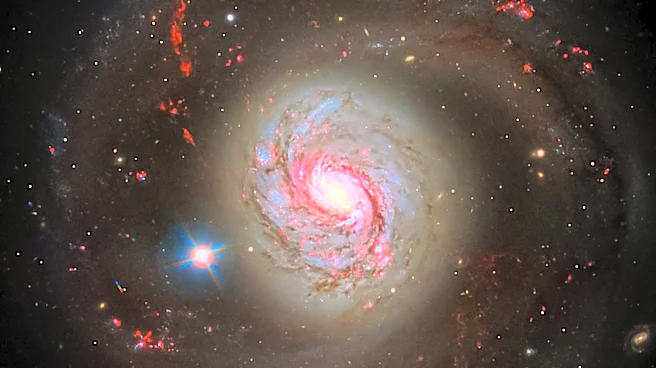
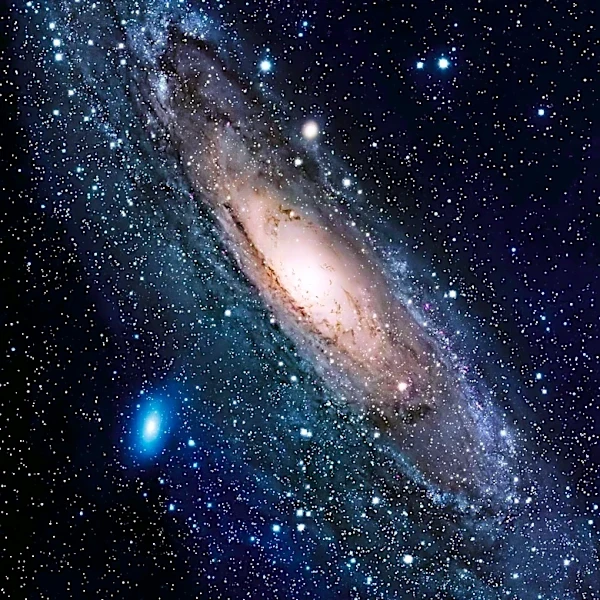
The Vera C. Rubin Observatory, located in Chile, has achieved a significant milestone by capturing an image containing more than 500,000 galaxies and over 50,000 stars using the largest digital camera ever built. This image was created by stacking hundreds
of individual images taken by the observatory's 3.2-gigapixel LSST Camera, mounted on the 8.4-meter Simonyi Survey Telescope. The resulting photograph reveals a variety of galaxies, including spiral, elliptical, and those caught mid-collision, as well as faint red galaxies from the early universe. The image focuses on the COSMOS field, a region of the sky that has been studied for over two decades due to its clear line of sight to distant galaxies, free from interference by nearby stars and dust clouds. This achievement is part of the observatory's broader mission, the Legacy Survey of Space and Time (LSST), which aims to create a detailed, continuously updated record of the universe over a ten-year period.
Why It's Important?
This development is crucial for the field of astronomy as it provides an unprecedented view of the universe, allowing scientists to study galaxies at various stages of their evolution. The Rubin Observatory's ability to repeatedly photograph the COSMOS field will enable researchers to track changes in the sky over time, offering insights into short-lived cosmic events like supernovae. The data collected will contribute to a deeper understanding of the universe's history and structure, potentially leading to new discoveries about the formation and behavior of galaxies. This project, funded by the US National Science Foundation and the US Department of Energy, represents a significant investment in scientific research and technological advancement, highlighting the importance of international collaboration in exploring the cosmos.
What's Next?
Future observations by the Rubin Observatory are expected to reveal even fainter galaxies and more detailed images than those currently available. The observatory plans to continue its survey of the COSMOS field, building a dynamic record of the universe that will be invaluable for ongoing and future research. Scientists anticipate that repeated visits to this region will uncover numerous short-lived cosmic phenomena, providing opportunities for detailed study and potentially leading to groundbreaking discoveries in astrophysics. The observatory's work will also support other astronomical projects by offering a comprehensive dataset that can be used to cross-reference and validate findings from other telescopes and research initiatives.