


What's Happening?
Former House District 15 Representative Don Burkhart presented a discussion on nuclear energy to the Board of Carbon County Commissioners in Saratoga on August 25th. Burkhart, who also serves on the University of Wyoming’s Energy Resources Council, detailed
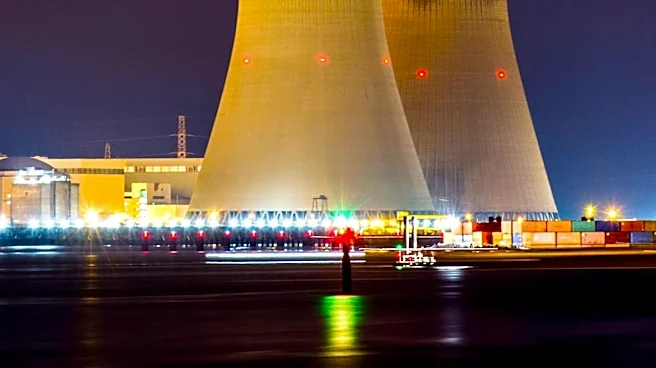
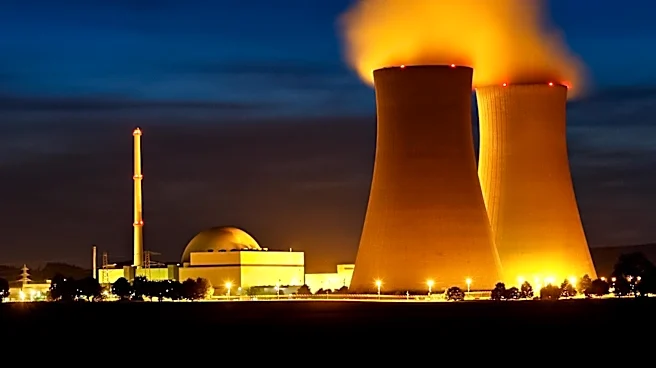
the process of nuclear power generation, from uranium mining to electricity production. He explained that while traditional nuclear reactors require significant land and exclusion zones, newer advanced reactors, like one being built in Kemmerer, are smaller, producing up to 300 megawatts on approximately 50 acres with a quarter-mile emergency buffer. Micro-reactors, in the 20-megawatt range, are even more compact, occupying only one acre. Burkhart highlighted that the U.S. currently derives 18.6 percent of its power from nuclear energy. He also noted that Wyoming still possesses over 4 million pounds of recoverable uranium, despite 75 years of mining. The discussion emphasized the economic advantages for Carbon County in attracting nuclear industry companies.
Why It's Important?
The discussion by Don Burkhart underscores a growing interest in nuclear energy as a vital component of the U.S. energy landscape and a potential economic driver for regions like Carbon County, Wyoming. Nuclear power offers a stable, low-carbon electricity source, which is crucial for national energy independence and climate goals. The shift towards smaller, more efficient advanced and micro-reactors could significantly reduce the land footprint and construction costs associated with nuclear power, making it a more viable option for diverse communities. Furthermore, the potential for job creation in manufacturing and operations, with workers earning approximately 10 percent more than in other industries, presents a substantial economic incentive. The U.S. Department of Energy's provision of hundreds of millions of dollars to encourage local nuclear industry projects, including spent fuel storage, indicates strong federal support and investment in this sector, positioning nuclear energy as a key area for future development and economic growth.
What's Next?
Carbon County could potentially see increased investment and development in the nuclear industry, driven by the economic incentives and federal support highlighted by Don Burkhart. The University of Wyoming's research into converting coal into graphite for reactor components, particularly using Kemmerer coal, suggests a future opportunity for the state to become a key supplier in the nuclear supply chain. This could lead to the construction of a graphite conversion plant in Carbon County, further diversifying its industrial base. Additionally, the prospect of attracting companies involved in nuclear energy production and spent fuel storage, potentially with annual payments of $1 billion for storage as suggested by Constellation, could provide significant long-term revenue and employment for the region. The ongoing advancements in reactor technology, particularly smaller, more manageable designs, may accelerate the deployment of nuclear power facilities across the U.S., with Wyoming playing a crucial role due to its uranium reserves and research capabilities.
Beyond the Headlines
The push for nuclear energy, as discussed by Don Burkhart, extends beyond immediate economic benefits and energy production, touching upon critical aspects of national security and technological innovation. The reliance on graphite for some reactor designs, currently dominated by China, highlights a strategic vulnerability that the University of Wyoming's research into coal-to-graphite conversion could address, fostering domestic supply chain resilience. This initiative could transform coal-dependent regions by repurposing existing resources for a high-tech industry, offering a pathway for economic transition. Moreover, the development of advanced and micro-reactors represents a significant leap in nuclear technology, potentially making nuclear power more adaptable and accessible for various applications, including remote communities or industrial sites. The ethical and environmental considerations of spent nuclear fuel storage, while addressed by potential financial incentives, remain a long-term challenge requiring robust and secure solutions, shaping public perception and policy for decades to come.