





What's Happening?
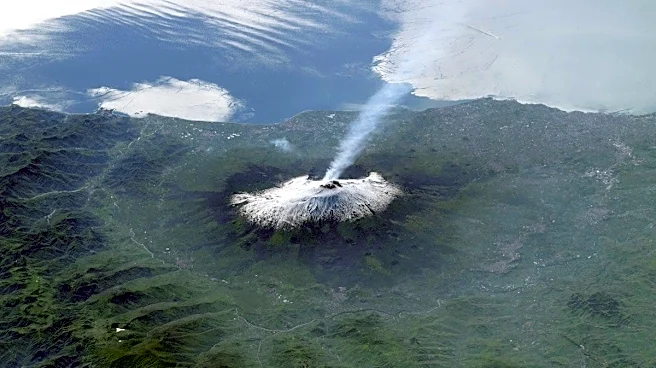
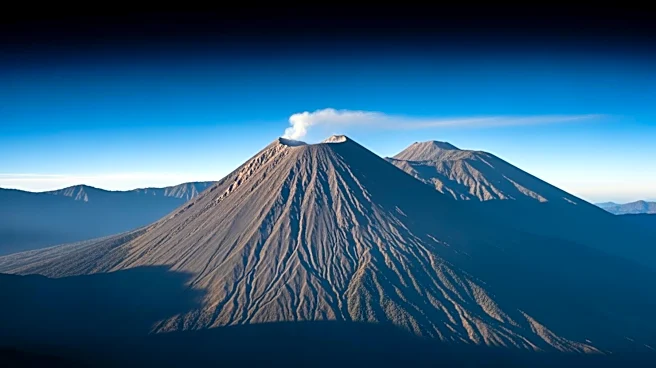
French astronaut Sophie Adenot, aboard the International Space Station (ISS), captured breathtaking images of Mount Vesuvius and Mount Etna from orbit. These photos highlight the serene appearance of Vesuvius, which last erupted in 1944, and the active
state of Etna, emitting gases and vapors. The images were shared on social media, showcasing the beauty of these natural landmarks from space. The ISS, a collaborative effort among global space agencies, continues to provide unique perspectives of Earth, contributing to scientific research and public engagement.
Why It's Important?
The photographs taken from the ISS offer valuable insights into Earth's geological features and natural phenomena. Such images can enhance public understanding of volcanic activity and its potential impacts. The ISS serves as a platform for international cooperation in space exploration, fostering scientific advancements and cultural exchange. The ability to capture and share these images underscores the importance of space missions in promoting global awareness and appreciation of Earth's natural wonders.
What's Next?
The continued operation of the ISS will likely result in more opportunities to capture and study Earth's features from space. Future missions may focus on monitoring environmental changes and natural disasters, providing critical data for scientific research and disaster response. The collaboration among international space agencies is expected to strengthen, with plans for new missions and technological innovations aimed at expanding human presence in space.
Beyond the Headlines
The images of Mount Vesuvius and Etna from space highlight the intersection of technology, science, and art. They serve as a reminder of the fragile beauty of our planet and the need for sustainable practices to preserve it. The ISS's role in capturing such images also emphasizes the importance of space exploration in fostering a sense of global unity and responsibility towards Earth's environment.