

What's Happening?
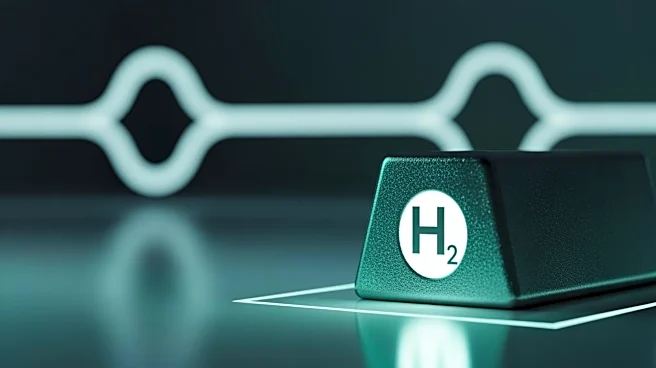
A consortium led by Sustainable Steel from Australia and Germany has successfully completed a pilot test in Namibia, converting low-grade Australian iron-ore into direct-reduced iron (DRI) using a hydrogen rotary kiln. This process, which is climate-neutral,
marks a significant step in decarbonizing steel production. The project, coordinated by the Federal Institute for Materials Research and Testing (BAM), aims to create a sustainable value chain linking Australia, Namibia, and Germany. The breakthrough allows for the use of lower-grade ores, expanding the resource base for green steel production.
Why It's Important?
The steel industry is responsible for approximately 7% of global CO2 emissions, making its transformation crucial for the energy transition. This breakthrough in hydrogen-based steel production could significantly reduce emissions and reliance on premium ores, which are scarce and costly. The successful pilot test demonstrates the economic viability of using lower-grade ores, potentially accelerating the adoption of green steel production globally. This innovation could lead to more sustainable manufacturing practices and contribute to global efforts to combat climate change.
What's Next?
The refined iron will be shipped from Namibia to Germany, where further integration into existing industrial processes will be explored. Salzgitter Mannesmann Forschung GmbH will investigate the production of climate-friendly steel for various applications. RWTH Aachen University will study the optimization of lower-grade Australian ores for direct reduction. The consortium's efforts are supported by funding from the German Federal Ministry of Research, Technology and Space, indicating continued investment in sustainable technologies.