


What's Happening?
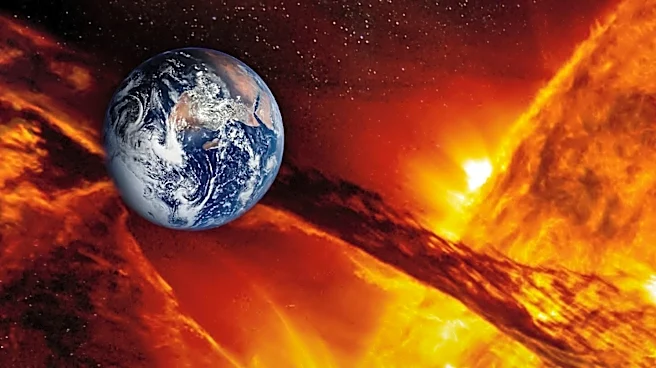
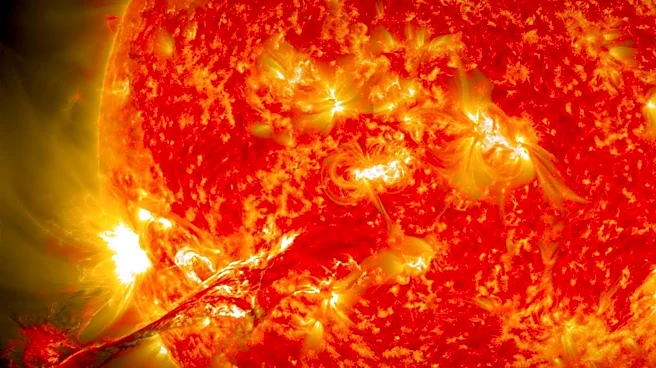
New research indicates that the impact of extreme solar storms, such as the Carrington Event of 1859, could be more severe than previously believed. The study challenges the notion that Earth's magnetic field has a natural limit to its response to solar storms.
Researchers found that previous analyses may have underestimated the potential impact due to measurement biases. The study suggests that during catastrophic events, the geomagnetic impact could be approximately twice as severe as traditional models have predicted.
Why It's Important?
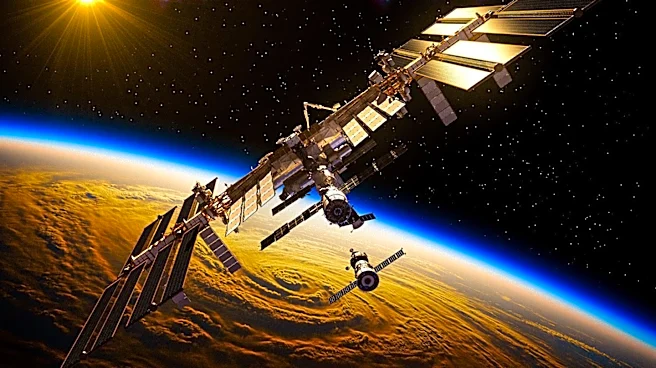
The findings have significant implications for understanding and preparing for space weather events. Extreme solar storms can disrupt electrical grids, navigation systems, and satellite communications, posing a threat to modern infrastructure. The research highlights the need for improved models and forecasting techniques to better predict and mitigate the effects of such events. As society becomes increasingly reliant on technology, understanding the potential risks of solar storms is crucial for ensuring the resilience of critical systems.
What's Next?
The study calls for further research to refine models of Earth's response to solar storms and to develop strategies for mitigating their impact. This may involve enhancing satellite monitoring and improving communication and power grid infrastructure to withstand potential disruptions. The findings also underscore the importance of international collaboration in space weather research and preparedness. As the study suggests, the rarity of extreme events means that ongoing observation and analysis are essential for building a comprehensive understanding of their potential impact.