






What's Happening?
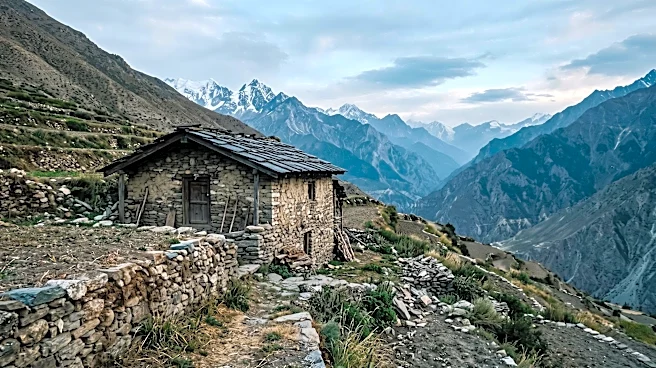
The Chhaupadi practice, a traditional custom that isolates menstruating women and girls, persists in remote areas of Humla, a mountainous district in Nepal. Despite ongoing awareness programs and the government declaring Chhaupadi a social offense, its
elimination remains a challenge in most villages. Recently, a street drama was staged in Raya village, Kharpunath Rural Municipality, to highlight the harmful nature of the practice and advocate for its cessation. The performance emphasized that the belief in impure food touched by menstruating women is a misconception and linked Chhaupadi to violence against women, urging reporting such incidents to the police. While some villages have successfully ended the practice, many continue to observe it, indicating a deep-rooted cultural challenge.
Why It's Important?
The persistence of Chhaupadi in Nepal underscores the significant challenges in eradicating harmful traditional practices, even with legal prohibitions and public awareness campaigns. This issue impacts the health, safety, and human rights of women and girls, perpetuating discrimination and violence. The continued observance of Chhaupadi reflects a broader societal struggle against deeply ingrained beliefs and highlights the need for sustained, community-led interventions. The link between Chhaupadi and violence against women, as highlighted by the street drama, points to the severe consequences for those subjected to the practice, including physical and psychological harm. The situation in Humla serves as a case study for the complexities involved in social reform and the importance of addressing cultural norms alongside legal frameworks.
What's Next?
Continued efforts will likely focus on sustained awareness campaigns and community engagement to challenge the misconceptions surrounding menstruation and Chhaupadi. The call to report violence against women to the police suggests a push for stronger enforcement of existing laws and greater accountability for perpetrators. Local organizations and government bodies may need to collaborate more closely to develop tailored strategies that address the specific cultural and social dynamics of each community. The ongoing struggle indicates that a multi-faceted approach, combining education, legal enforcement, and community dialogue, will be necessary to achieve the complete eradication of Chhaupadi and ensure the safety and dignity of women and girls in Nepal.
Beyond the Headlines
The enduring presence of Chhaupadi reveals the profound influence of cultural and religious beliefs on societal practices, even in the face of modern legal and social reforms. This situation raises questions about the effectiveness of top-down legislative approaches without corresponding shifts in community attitudes and understanding. The practice also highlights the vulnerability of marginalized groups, particularly women and girls, to traditional norms that can infringe upon their fundamental rights. Addressing Chhaupadi requires a delicate balance between respecting cultural heritage and upholding universal human rights, prompting a deeper examination of how societies can evolve while preserving positive aspects of their traditions. The struggle in Nepal is a microcosm of similar challenges faced globally in combating harmful traditional practices.