
What's Happening?
The article discusses the impact of capitalism on ecological destruction and social upheaval, highlighting the dual nature of capitalist development. It argues that while capitalism has driven scientific
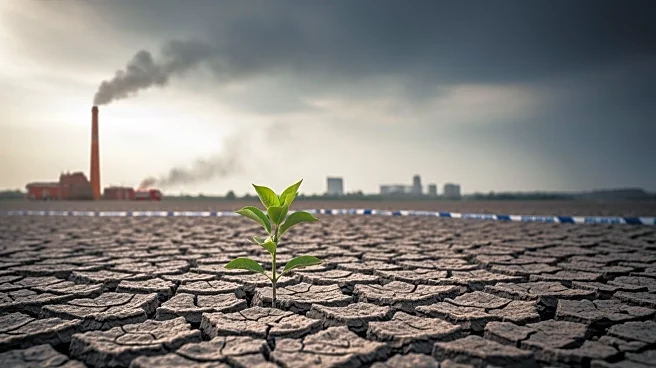
and engineering breakthroughs, it has also contributed to ecological crises and potential mass extinction. The piece suggests that the constant expansion of capitalism has led to a pervasive logic that dominates global thinking, making it difficult to imagine alternatives. The article also critiques the role of tech industry leaders and fossil fuel companies in exacerbating environmental degradation, suggesting that their pursuit of profit maximization is accelerating climate change. The narrative frames capitalism as a 'death cult' due to its destructive tendencies and the inability of political and business leaders to escape its logic.
Why It's Important?
The significance of this discussion lies in its critique of capitalism's impact on the environment and society. By framing capitalism as a system that prioritizes profit over ecological and social well-being, the article raises questions about the sustainability of current economic practices. It highlights the potential consequences of unchecked capitalist expansion, such as rising sea levels, loss of biodiversity, and increased social inequality. The piece also underscores the ethical implications of prioritizing economic growth over environmental preservation, suggesting that a shift towards more sustainable and equitable economic models is necessary. This critique is particularly relevant in the context of ongoing global discussions about climate change and the need for systemic change to address environmental and social challenges.
What's Next?
The article suggests that without significant changes to the current economic system, the ecological and social crises will continue to worsen. It calls for a transition to an ecosocialist society, where economic activities are democratically planned and focused on meeting human needs rather than maximizing market share. The piece advocates for a collective ownership model that prioritizes sustainability and equitable distribution of resources. It also emphasizes the need for global cooperation to address climate change and other systemic issues, urging political and business leaders to move beyond profit-driven models. The article implies that without such changes, the world may face irreversible ecological damage and increased social unrest.
Beyond the Headlines
The deeper implications of the article's critique of capitalism include ethical and cultural dimensions. It challenges the prevailing 'common sense' that economic growth is inherently beneficial, questioning the moral justification for practices that harm the environment and exacerbate social inequalities. The piece also highlights the cultural dominance of capitalist logic, which shapes societal values and priorities. By framing capitalism as a 'death cult,' the article invites readers to reconsider the cultural narratives that support destructive economic practices. It suggests that a cultural shift towards valuing sustainability and collective well-being is necessary to address the root causes of ecological and social crises.