







What's Happening?
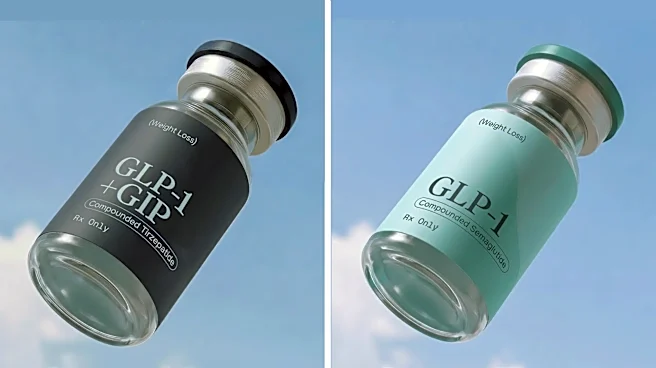
The U.S. Food and Drug Administration (FDA) has issued warning letters to several companies for selling unapproved GLP-1 drugs, including retatrutide, which is an investigational drug not yet approved for sale. These unapproved products are often marketed
for weight loss and are being sold through unregulated online sources. Eli Lilly, the developer of retatrutide, has also filed multiple lawsuits against vendors for alleged illegal sales of the drug. Tests conducted by the Australian Therapeutic Goods Administration (TGA) on a vial sold as retatrutide, following a serious adverse event, revealed it contained undeclared semaglutide at approximately eight times the level found in approved products, and no actual retatrutide. This highlights the significant risks associated with purchasing such medications from the black market, including the potential for counterfeit, contaminated, or ineffective products with incorrect dosages.
Why It's Important?
The proliferation of unapproved and counterfeit GLP-1 drugs poses a substantial public health risk in the U.S. Consumers seeking weight loss solutions may unknowingly purchase products that are not only ineffective but also dangerous due to undeclared ingredients, incorrect dosages, or lack of sterility. The FDA's actions and Eli Lilly's lawsuits underscore a critical effort to protect consumers from these illicit markets. The presence of highly concentrated, undeclared active pharmaceutical ingredients, as seen with the semaglutide in counterfeit retatrutide, can lead to severe adverse health consequences, including the reported case of a patient suffering a torn esophagus. This situation also highlights the challenges regulatory bodies face in controlling the online sale of unapproved medications and the importance of consumers obtaining prescription drugs only through legitimate, regulated channels.
What's Next?
The FDA is expected to continue its surveillance and enforcement actions against companies selling unapproved GLP-1 drugs. Eli Lilly's ongoing lawsuits aim to shut down the black market for retatrutide and other unapproved weight loss medications, which could lead to more legal actions against illicit sellers. Consumers are advised to exercise extreme caution and only obtain prescription medications from licensed pharmacies with a valid prescription. Further public awareness campaigns may be necessary to educate individuals about the dangers of purchasing drugs from unregulated online sources. The development of legitimate GLP-1 drugs, such as retatrutide, will continue through clinical trials, with Eli Lilly planning to submit retatrutide to the FDA in Q1 2027 for approval, which would eventually provide a regulated pathway for access.
Beyond the Headlines
This issue extends beyond immediate health risks, touching upon broader ethical and regulatory challenges in the pharmaceutical landscape. The 'research use only' labeling often employed by black market sellers is a deceptive tactic that exploits regulatory loopholes, as the FDA has clarified that such labels do not exempt products intended for human use from regulatory oversight. This situation also reflects a growing demand for weight loss medications, which illicit markets are eager to exploit. The ease with which unapproved drugs can be purchased online highlights the need for enhanced digital policing and international cooperation to curb the sale of counterfeit pharmaceuticals. The long-term implications could include a erosion of trust in pharmaceutical products if consumers cannot distinguish between legitimate and illicit sources, and a potential increase in adverse drug events due to unregulated substances.