







What's Happening?
The United States has issued a warning to commercial shippers regarding payments to Iran for passage through the Strait of Hormuz. The Treasury Department's Office of Foreign Assets Control (OFAC) stated that American individuals and companies are generally
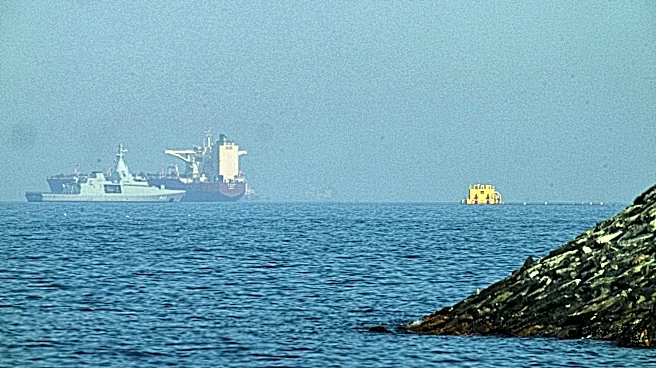
prohibited from making payments to Iranian government entities. The notice also cautions foreign firms that they could face sanctions if they engage in such transactions. This development comes as Iran has reportedly begun collecting tolls from ships passing through the strait, with the first revenues deposited into its central bank. The Strait of Hormuz is a critical chokepoint for global oil and natural gas trade, with about 20% of the world's supply passing through it. The US alert highlights the potential forms of payment, including cash, digital assets, and in-kind transfers, and warns that non-US companies could face civil or criminal liability if their transactions lead US banks or insurers to breach sanctions.
Why It's Important?
This warning from the US Treasury underscores the ongoing geopolitical tensions between the United States and Iran, particularly concerning control over the Strait of Hormuz. The strait's strategic importance as a major transit route for oil and gas makes it a focal point in US-Iran relations. The imposition of tolls by Iran and the subsequent US warning could impact global shipping and energy markets, potentially leading to increased shipping costs and affecting global oil prices. Companies involved in maritime trade must navigate these complex sanctions to avoid legal repercussions, which could influence their operational strategies and financial planning. The situation also reflects broader US efforts to exert economic pressure on Iran, aiming to limit its revenue sources and influence in the region.
What's Next?
The situation may lead to increased diplomatic and economic tensions between the US and Iran. Shipping companies and international stakeholders will likely seek clarity on the legal implications of the US warning and may adjust their operations to comply with sanctions. The US could potentially increase its naval presence in the region to ensure the free flow of commerce through the strait. Additionally, there may be further diplomatic engagements or negotiations aimed at resolving the standoff, although the path forward remains uncertain given the complex geopolitical dynamics.