




What's Happening?
The United Nations Office for Disaster Risk Reduction (UNDRR) is hosting Part III of its 'Droughts, Floods and Food Systems' risk dialogue series, focusing on 'Turning Food System Risk into Food System Resilience: Innovative Solutions for Drought Management.'
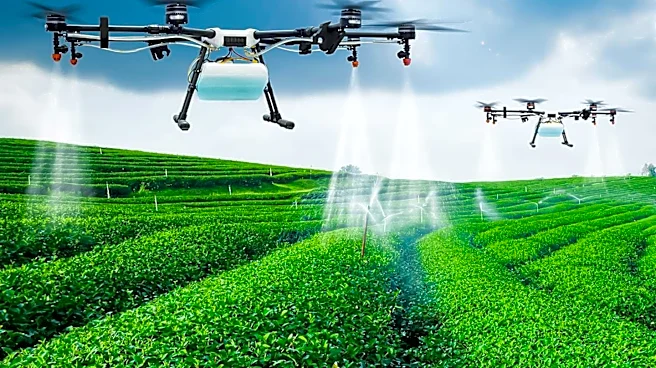
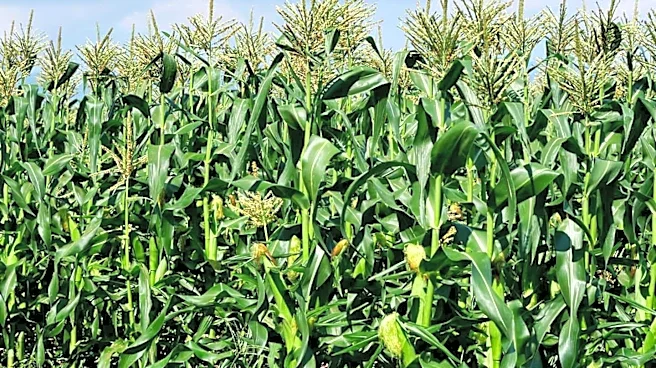
This session, held from 15:00 to 16:00 CET, addresses the intensifying impact of weather-related shocks on agricultural productivity, global commodity market volatility, and supply chain disruptions. These issues weaken farmers' income and resilience, directly affecting food security. The dialogue emphasizes that while preventing disasters and reducing exposure are crucial for protecting agrifood systems, a significant level of residual risk will always remain. To mitigate these impacts, countries require stronger financial tools, including social safety nets, climate finance, and well-designed insurance schemes to help households and producers absorb losses and recover more quickly. The session also highlights the importance of climate-smart and regenerative agriculture, supported by precision farming techniques, AI-driven farm analytics, and new products and services for knowledge transfer.
Why It's Important?
This UNDRR dialogue is critical because it addresses the escalating global challenge of food insecurity driven by climate change and extreme weather events. The discussions on innovative solutions for drought management and food system resilience have far-reaching implications for global food supply chains and economic stability. By focusing on risk-reduction finance, the dialogue aims to buffer against global food price shocks and volatility, which can have significant economic consequences for both producers and consumers worldwide. Investment in regenerative farming techniques and climate-smart agriculture is essential for creating more sustainable and resilient food systems, ensuring long-term food security. The integration of digital innovation, such as early warning systems and anticipatory action, can provide crucial tools for mitigating the impact of disasters, protecting livelihoods, and preventing humanitarian crises. The outcomes of such dialogues can inform policy-making and investment strategies, leading to more robust and adaptable agricultural practices globally.
What's Next?
The dialogue aims to explore how risk-reduction finance can effectively buffer against global food price shocks and volatility. It will also delve into how investments in regenerative farming techniques and climate-smart agriculture can contribute to building food-system resilience. A key focus will be on locally developed digital innovations that can support early warning systems and anticipatory action, enabling communities to prepare for and respond to weather-related shocks more effectively. The insights and recommendations from this session are expected to guide future strategies and collaborations among governments, international organizations, and local communities. The continued development and scaling of climate-smart agricultural practices and financial mechanisms will be crucial for enhancing global food security and mitigating the economic and social impacts of climate change on agricultural systems.
Beyond the Headlines
Beyond the immediate discussions on drought management, this UNDRR dialogue touches upon the broader ethical and societal responsibilities concerning climate change and global equity. The intensification of weather-related shocks disproportionately affects vulnerable communities and developing nations, exacerbating existing inequalities. The call for stronger financial tools and social safety nets underscores the moral imperative to protect those most at risk from climate-induced food insecurity. Furthermore, the emphasis on climate-smart and regenerative agriculture represents a paradigm shift towards more sustainable and ecologically sound food production, moving away from practices that contribute to environmental degradation. This dialogue highlights the interconnectedness of environmental health, economic stability, and social justice, advocating for a holistic approach to building resilient food systems that can withstand future challenges and ensure equitable access to food for all.