







What's Happening?
The Inter-American Development Bank (IDB) has approved a $70 million Specific Investment Loan (ESP) aimed at enhancing drinking water services in the Central District Municipality of Honduras. This initiative seeks to mitigate structural factors contributing
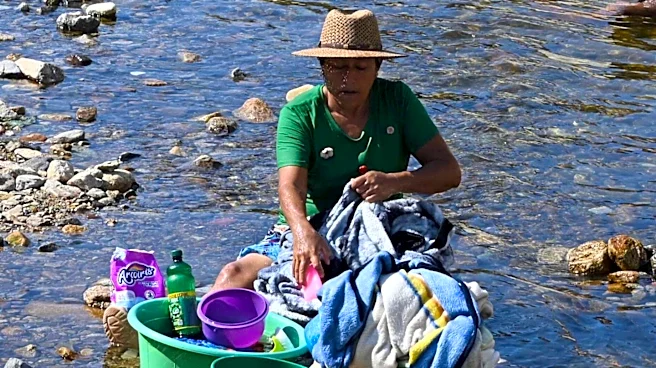
to poverty and inequality within the region. The funding package includes $42 million from the IDB’s Ordinary Capital, featuring a 25-year term, a 5.5-year grace period, and an interest rate based on SOFR. An additional $28 million will come from the IDB’s Concessional Ordinary Capital, offering a 40-year amortization and grace period with a 0.25% interest rate. The project will also bolster the operational and commercial management capabilities of the Municipal Water and Sanitation Unit (UMAPS). Planned investments encompass hydraulic sectorization of the water distribution network, pressure management, replacement or installation of new pipelines, rehabilitation of obsolete infrastructure, and expansion of pumping facilities. Equipment for measuring water volumes, flows, and pressure levels will also be acquired and installed. The Central District Municipality, which includes Tegucigalpa and Comayagüela, faces a high prevalence of waterborne diseases due to inadequate access to safe water and poor water quality.
Why It's Important?
This significant investment by the IDB underscores a critical effort to address public health and socio-economic disparities in Honduras, a country within Latin America and the Caribbean. Improving drinking water services directly impacts the health and well-being of approximately 345,000 people, including 110,000 direct and 235,000 indirect beneficiaries, particularly low-income and vulnerable households. Enhanced access to safe and reliable water can drastically reduce the incidence of waterborne diseases, thereby improving public health outcomes and reducing healthcare burdens. Furthermore, strengthening UMAPS' management capabilities through digital tools and new methodologies will ensure the long-term sustainability and efficiency of the water system. This project aligns with broader development goals to foster sustainable and inclusive growth, demonstrating how targeted infrastructure investments can serve as a catalyst for poverty reduction and increased equality in developing nations. The IDB's commitment reflects a strategic approach to regional development by combining financial support with technical expertise to create lasting positive change.
What's Next?
The immediate next steps involve the implementation of the planned investments, including the hydraulic sectorization of the water distribution network, installation of new pipelines, and rehabilitation of existing infrastructure. UMAPS will also begin adopting digital tools and new methodologies to enhance its operational and commercial management. The project is expected to lead to a more reliable and efficient drinking water supply, particularly benefiting vulnerable populations. The IDB will likely monitor the progress and impact of these improvements, assessing the reduction in waterborne diseases and the overall enhancement of living conditions in the Central District Municipality. This initiative could serve as a model for similar projects in other regions facing comparable challenges, potentially influencing future IDB funding decisions and development strategies across Latin America and the Caribbean. Continued collaboration between the IDB and local authorities will be crucial for the successful execution and long-term maintenance of the improved water systems.
Beyond the Headlines
Beyond the immediate health and economic benefits, this project has profound implications for social equity and environmental sustainability. By targeting low-income and vulnerable households, the initiative addresses a fundamental human right to clean water, which is often disproportionately denied to marginalized communities. This can lead to greater social stability and reduced inequality. Environmentally, the rehabilitation and modernization of water infrastructure can minimize water loss, improve resource management, and potentially reduce the ecological footprint associated with inefficient water systems. The adoption of digital tools by UMAPS also signifies a broader trend towards technological integration in public services, fostering greater transparency, accountability, and efficiency in governance. This project highlights the interconnectedness of public health, economic development, and social justice, demonstrating how strategic investments in one area can create ripple effects across multiple dimensions of societal well-being. It also underscores the role of international financial institutions like the IDB in driving sustainable development in regions with critical infrastructure needs.