







What's Happening?
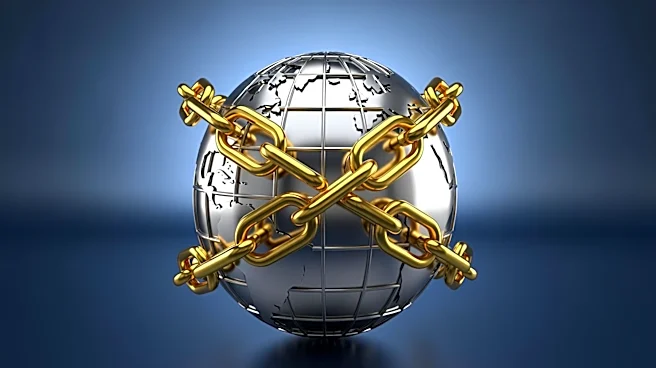
A report by the U.S. Chamber of Commerce highlights China's increasing use of state power to dominate global supply chains. The report details how China is extending its industrial policy across various sectors, including chemicals, machinery, and industrial equipment,
traditionally led by advanced economies. China's strategy involves reducing import dependencies and expanding its global market share, particularly in artificial intelligence and frontier technologies. The report warns that if current trends continue, advanced economies could face significant erosion in manufacturing competitiveness, with up to $650 billion of G7 manufacturing exports potentially exposed to Chinese market share gains by 2030.
Why It's Important?
China's expanding influence in global supply chains poses significant challenges for advanced economies, particularly those in the G7. The shift in manufacturing dominance could lead to increased economic dependencies on China, affecting global trade dynamics and economic stability. As China continues to invest in cutting-edge technologies and expand its industrial capacity, other countries may struggle to compete, potentially leading to job losses and economic downturns in affected sectors. The report underscores the need for coordinated international responses to address these challenges and mitigate the risks associated with China's growing economic power.
What's Next?
The report suggests that global responses to China's supply chain dominance remain fragmented and uncoordinated. To counteract China's influence, advanced economies may need to develop comprehensive strategies that include diversifying supply chains, investing in domestic manufacturing capabilities, and fostering innovation in key sectors. Policymakers and industry leaders will likely need to collaborate on creating effective policies to protect their economic interests and ensure long-term competitiveness. The window for implementing these measures is narrowing, making it crucial for stakeholders to act swiftly to address the challenges posed by China's industrial strategy.