


What's Happening?
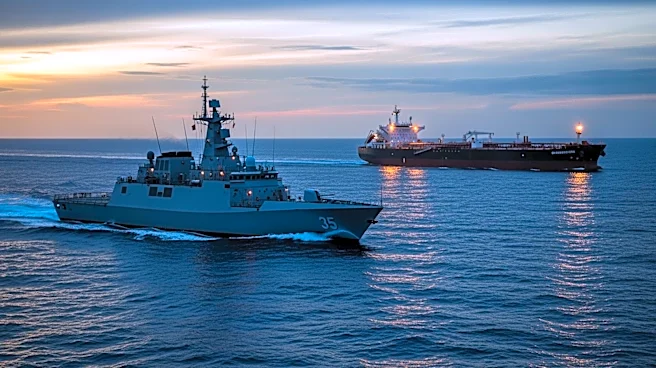
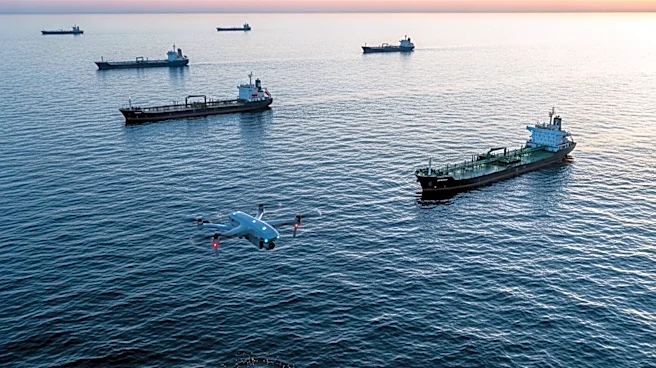
French President Emmanuel Macron announced that the French Navy, supported by the United Kingdom, intercepted an oil tanker linked to Russia in the Atlantic Ocean. The tanker, named Tagor, was boarded on Sunday as part of efforts to enforce international
sanctions against Russia. Macron emphasized the importance of preventing Russian oil exports from financing President Vladimir Putin's war against Ukraine. The operation was conducted in compliance with international maritime law, and a video shared by Macron showed personnel rappelling from a helicopter onto the ship. The interception is part of a broader initiative by France and other countries to target Russia's 'shadow fleet,' which is believed to be used to evade sanctions.
Why It's Important?
The interception of the Russia-linked oil tanker highlights the ongoing international efforts to enforce sanctions against Russia, aiming to cut off financial support for its military activities in Ukraine. Oil revenue is a significant component of Russia's economy, enabling the country to sustain its war efforts without severe economic repercussions domestically. By targeting these shipments, France and its allies are attempting to weaken Russia's economic foundation and pressure it to cease its aggressive actions. The operation also underscores the collaborative efforts between nations like France and the UK to uphold international law and maritime security.
What's Next?
France and the UK are expected to continue their vigilance against Russia's 'shadow fleet,' with further operations likely to intercept and inspect vessels suspected of violating sanctions. The international community may increase pressure on Russia through diplomatic channels, urging compliance with global norms. Additionally, there could be discussions on enhancing maritime security measures and cooperation among nations to prevent sanction evasion. The intercepted tanker may face legal proceedings, and its cargo could be seized as part of the enforcement actions.
Beyond the Headlines
The interception raises questions about the effectiveness of international sanctions and the challenges in enforcing them across global waters. It also highlights the environmental risks posed by vessels that violate maritime laws, potentially leading to pollution and safety hazards. The operation reflects the geopolitical tensions surrounding the Ukraine conflict and the broader implications for international trade and security. As nations navigate these complex issues, the balance between economic interests and ethical considerations remains a critical aspect of global diplomacy.