






What's Happening?
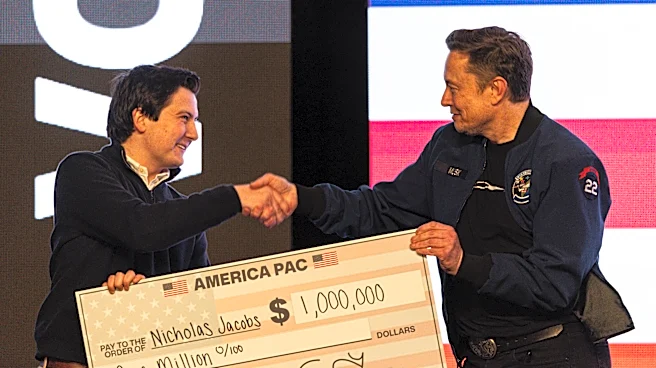
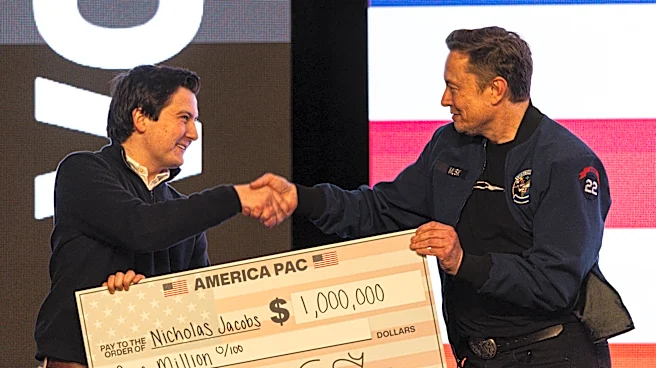
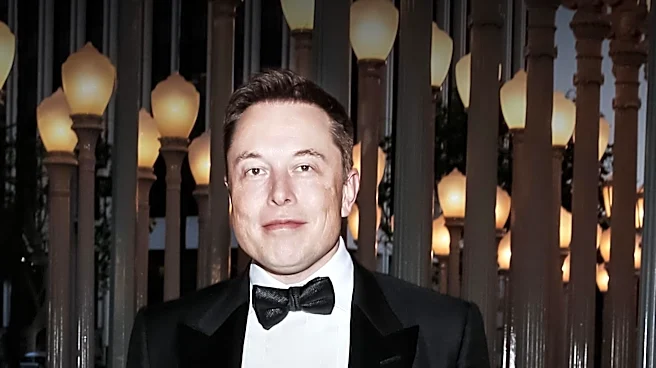
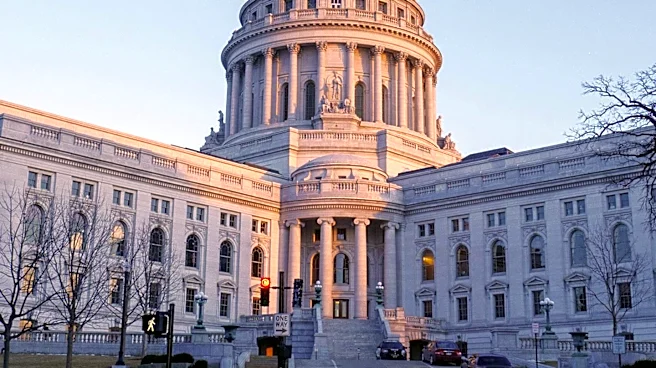
Elon Musk is under scrutiny for potentially violating Wisconsin's election laws by offering financial incentives linked to voting in the 2025 Wisconsin Supreme Court election. The Wisconsin Elections Commission has found probable cause that Musk's actions,
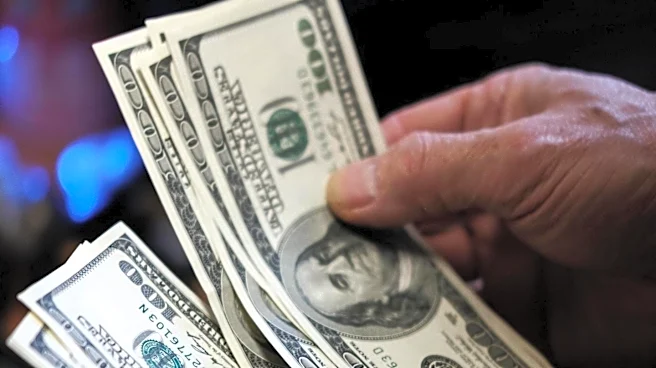
which included offering $1 million payments, may constitute election bribery. The commission voted 5-1 to refer the case to prosecutors, who now have 40 days to decide whether to file criminal charges. The case centers on whether Musk's financial incentives, distributed through his political action committee, America PAC, were intended to influence voting behavior, which would be illegal under state law. The election itself was the most expensive judicial race in U.S. history, with over $100 million spent, and saw liberal candidate Susan Crawford defeat conservative Brad Schimel.
Why It's Important?
This case is significant as it tests the boundaries of campaign finance laws and First Amendment protections. If Musk's actions are deemed illegal, it could set a precedent limiting how financial incentives can be used in political campaigns. Conversely, if the payments are considered protected political speech, it could open the door for similar tactics in future elections. The outcome could influence how wealthy donors engage in political campaigns and affect the legal framework governing election-related financial activities. The case also highlights the increasing role of state supreme courts in national issues, underscoring the broader implications of the election beyond Wisconsin.
What's Next?
The Brown County District Attorney will decide within 40 days whether to bring charges against Musk. If charges are filed, it could lead to a lengthy legal battle, potentially reaching higher courts and setting a legal precedent. Regardless of the criminal proceedings, civil lawsuits challenging the legality of Musk's payments are already underway. These cases could further shape the legal landscape of campaign finance and political engagement. The decision will also likely spark broader debates about the influence of money in politics and the ethical boundaries of campaign strategies.