








What's Happening?
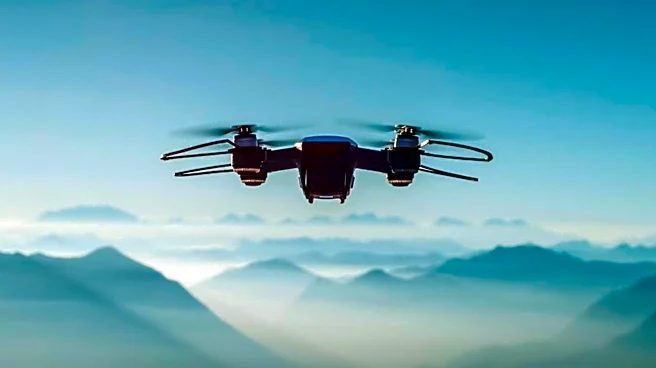
AT&T and Ericsson have showcased a new application of 5G technology to track and identify rogue drones. During a demonstration in Arlington, Texas, the companies used 5G cellular radios to track drones in real-time, highlighting the potential of Integrated
Sensing and Communication (ISAC) technology. This technology leverages existing 5G infrastructure to detect and classify drones, offering a new method for monitoring airspace, especially in no-fly zones. The demonstration involved a multistatic sensing configuration using three cell towers equipped with Ericsson's Massive MIMO radios. This setup allowed for the detection and tracking of drones, providing real-time data that could be shared with law enforcement and other agencies.
Why It's Important?
The ability to track drones using 5G networks represents a significant advancement in airspace security. As drones become more prevalent, the risk of them entering restricted areas increases, posing potential threats to public safety and security. This technology could be crucial for large events, such as the 2028 Olympics in Los Angeles, where airspace security is paramount. By utilizing existing 5G infrastructure, this method offers a cost-effective and scalable solution compared to traditional radar systems. It also enhances the resilience of tracking systems, as 5G networks can automatically compensate for tower outages, ensuring continuous monitoring.
What's Next?
The demonstration by AT&T and Ericsson is a step towards integrating this technology into broader security frameworks. As the technology matures, it could be adopted for various applications, including monitoring autonomous vehicles and enhancing public safety measures. The companies are pushing for the inclusion of this technology in future 6G standards, aiming to accelerate its deployment. This proactive approach could lead to widespread adoption before the official rollout of 6G, potentially transforming how airspace security is managed.