


What's Happening?
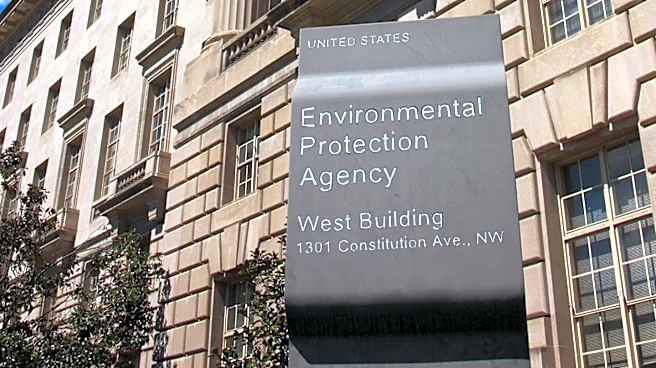
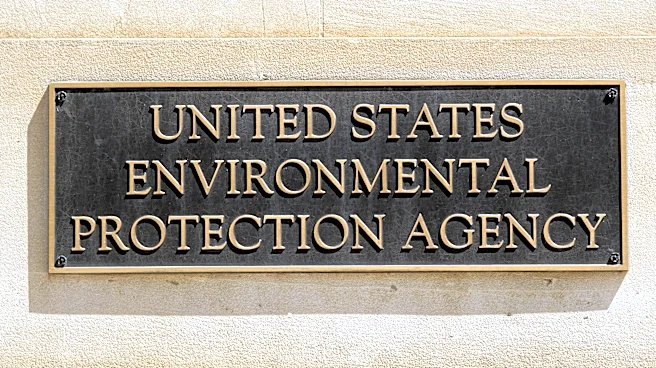
A coalition of national and Midwest-based public health and environmental organizations has formally petitioned the U.S. Environmental Protection Agency (EPA) to significantly reduce the legal limit for nitrate in public drinking water. The current federal
standard, set decades ago, is 10 milligrams per liter (mg/L), primarily established to prevent infant methemoglobinemia, also known as 'blue baby syndrome.' The coalition argues that this threshold is insufficient to protect public health, citing more than 30 peer-reviewed human health studies that link long-term exposure to lower levels of nitrate with increased risks of colorectal cancer, thyroid disease, and neural tube defects. They are advocating for the standard to be lowered to 1 mg/L. Additionally, the petitioners are urging the EPA to implement more robust measures to address the sources of nitrate contamination, largely from agricultural runoff, and to increase federal funding to assist public drinking water systems in upgrading their infrastructure to meet a stricter standard. The coalition includes prominent groups such as Food & Water Watch, Environmental Law & Policy Center, Union of Concerned Scientists, and Natural Resources Defense Council.
Why It's Important?
This petition is significant because it directly challenges a long-standing federal drinking water standard based on updated scientific understanding of nitrate's health impacts. If the EPA acts on this petition, it could lead to a major overhaul of water treatment requirements across the U.S., particularly in agricultural regions where nitrate contamination is prevalent. A lower nitrate limit would necessitate substantial investments in water infrastructure for many municipalities, potentially increasing costs for water utilities and, subsequently, consumers. However, the coalition's assessment suggests that the public health benefits of a 1 mg/L standard would be 3.9 times greater than the projected infrastructure costs over the next 50 years. This move could also pressure agricultural sectors to adopt more sustainable practices, such as cover cropping and reduced fertilizer use, to mitigate runoff, thereby impacting farming economics and practices. The petition forces the EPA to formally respond, potentially initiating a review process that has stalled multiple times in the past, highlighting a critical public health and environmental policy debate.
What's Next?
The EPA is now legally obligated to respond to the petition within a 'reasonable time,' although no specific timeline is mandated by federal law. The agency's response could range from initiating a formal review of the nitrate standard to denying the petition. If the EPA decides to review the standard, it would likely involve extensive scientific assessment, public comment periods, and potentially new rulemaking processes, which can be lengthy. Stakeholders, including agricultural industry groups, water utilities, and public health advocates, will closely monitor the EPA's actions and likely engage in lobbying and advocacy efforts. Should the standard be lowered, public drinking water systems would face the challenge of financing and implementing necessary upgrades, potentially through federal grants and loan programs as advocated by the coalition. Furthermore, state environmental agencies might be compelled to strengthen regulations on agricultural runoff to help meet the new federal drinking water quality targets.
Beyond the Headlines
The petition underscores a broader tension between agricultural productivity and environmental health, particularly concerning water quality. The issue of nitrate contamination highlights the diffuse nature of non-point source pollution, which is notoriously difficult to regulate and control compared to industrial point sources. A stricter nitrate standard could catalyze innovation in agricultural practices and water treatment technologies, pushing for more integrated approaches to land and water management. Ethically, it raises questions about the balance between economic interests in food production and the public's right to safe drinking water, especially in rural communities often disproportionately affected by agricultural pollution. Legally, the petition tests the EPA's commitment to updating environmental regulations based on evolving scientific evidence and its responsiveness to public health concerns, potentially setting a precedent for other contaminants where existing standards may be outdated.