
What's Happening?
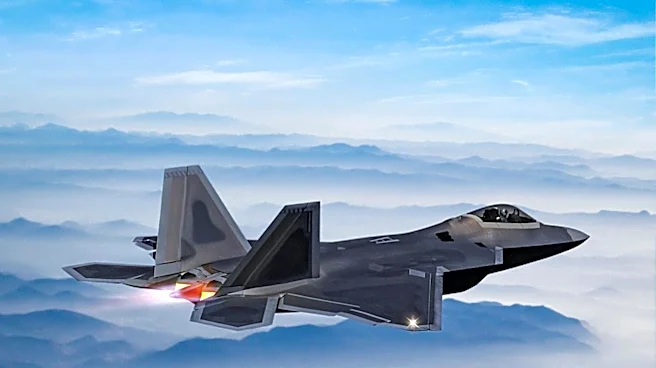
Kadena Air Base in Okinawa, Japan, is hosting a readiness exercise involving F-22 Raptors from the 27th and 90th Expeditionary Fighter Squadrons. This exercise, known as Beverly Beach 26-1, aims to enhance
combat readiness through agile combat employment principles. The exercise comes as the base awaits the delayed arrival of F-15EX Eagle II jets, initially expected to be operational by now. The F-15EXs are scheduled to arrive in 2027, with a full complement by 2028. The 18th Wing's previous fleet of F-15C/D jets had patrolled the airspace around Okinawa and the South China Sea for years.
Why It's Important?
The readiness exercise at Kadena underscores the strategic importance of maintaining a robust U.S. military presence in the Indo-Pacific region, particularly amid rising tensions with China over Taiwan and the South China Sea. The delay in the arrival of the F-15EX jets highlights challenges in military procurement and deployment schedules, which can impact operational readiness. The exercise with F-22s, a fifth-generation fighter, demonstrates the U.S. Air Force's commitment to maintaining air superiority and readiness to respond to regional threats.
What's Next?
The U.S. Air Force will continue to rotate fighter units at Kadena until the F-15EXs are fully operational. The ongoing exercises will likely enhance the readiness of U.S. forces in the region, ensuring they are prepared to respond to any potential conflicts. The arrival of the F-15EXs will provide additional firepower and capabilities, complementing the existing fleet of F-22s and F-35s in the region. The U.S. may also engage in further joint exercises with regional allies to strengthen defense cooperation.
Beyond the Headlines
The delay in the F-15EX deployment highlights broader issues in military logistics and procurement, which can affect strategic planning and readiness. The exercise at Kadena also reflects the U.S. military's focus on agile combat employment, a strategy that emphasizes flexibility and rapid response to emerging threats. This approach is increasingly important in the dynamic security environment of the Indo-Pacific region.