






What's Happening?
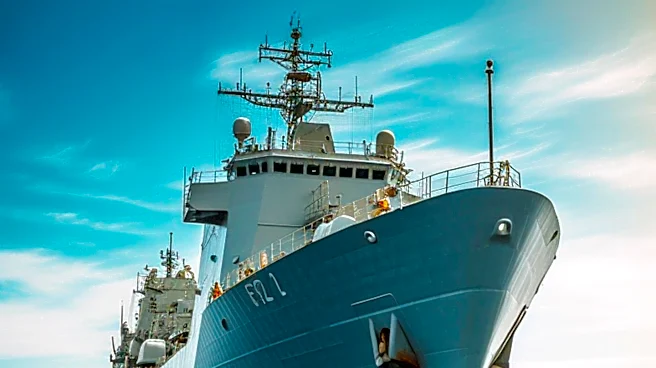
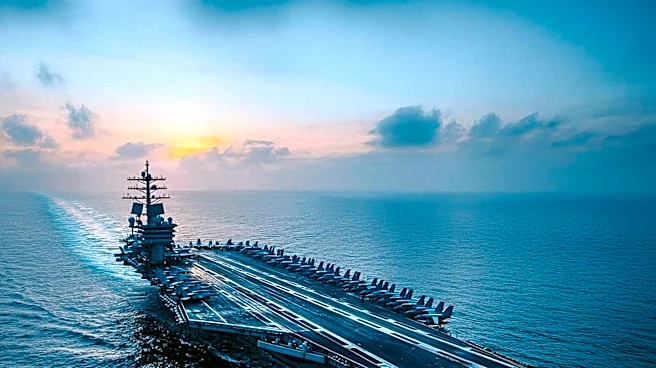
The HMS Queen Elizabeth, a Portsmouth-based aircraft carrier, has resumed helicopter operations and is preparing to serve as the flagship for NATO’s Allied Reaction Force. The carrier recently achieved certification for daytime rotary-wing operations following
a re-certification period in Rosyth. It is currently holding NATO command ship duties until mid-2027, during which it would lead a multinational naval force in the event of a global crisis. A command staff has been onboard to familiarize themselves with the carrier's operations. Training exercises are being conducted in UK waters and the eastern Atlantic this autumn to prepare for more complex exercises in 2027, including NATO’s Steadfast Defender. These preparations are crucial as the HMS Queen Elizabeth works towards taking over flagship duties from HMS Prince of Wales. The crew has also demonstrated its ability to handle emergencies, including aircraft crashes, pilot recovery, and engine-room fires.
Why It's Important?
The readiness of HMS Queen Elizabeth for its NATO role is significant for international defense and security, particularly in the context of global crises. As a NATO command ship, it will play a crucial role in leading multinational naval forces, demonstrating the alliance's capability to project power and respond to threats. The resumption of air operations and the ongoing training exercises underscore the commitment of the United Kingdom to its NATO obligations and its ability to contribute to collective defense. The carrier's capacity to embark F-35B Lightning II stealth fighters, helicopters, and drones enhances NATO's air superiority and maritime strike capabilities. This development reinforces the strategic importance of aircraft carriers in modern naval warfare and their role in maintaining stability and deterring aggression in various regions, including the Indo-Pacific, as indicated by the broader context of defense developments.
What's Next?
The HMS Queen Elizabeth will continue its training exercises in UK waters and the eastern Atlantic throughout the autumn. These exercises are designed to prepare the carrier for more complex operations in 2027, including participation in NATO’s Steadfast Defender exercise. The ultimate goal is for the HMS Queen Elizabeth to assume flagship duties from HMS Prince of Wales, solidifying its role as a key asset in NATO's rapid response capabilities. The next major step will be the embarkation of an air wing comprising F-35B Lightning II stealth fighters, various helicopters, and drones, which will significantly enhance its operational capacity. The carrier's command staff will continue to integrate and refine operational procedures to ensure seamless command and control during potential multinational deployments. Future visits to ports, similar to its recent call at Belfast, are also anticipated to strengthen public relations and demonstrate naval presence.
Beyond the Headlines
The deployment and readiness of the HMS Queen Elizabeth highlight the evolving nature of global defense strategies and the increasing emphasis on multinational cooperation. The carrier's role as a NATO command ship signifies a deeper integration of allied forces and a shared commitment to collective security. This development also reflects the ongoing technological advancements in naval aviation and defense systems, with the integration of F-35B stealth fighters and advanced helicopter capabilities. The rigorous training and re-certification processes underscore the high standards required for modern naval operations and the continuous need for readiness in a dynamic geopolitical landscape. Furthermore, the carrier's ability to project power globally has implications for maintaining freedom of navigation and supporting diplomatic efforts in contested regions, contributing to broader international stability.