


What's Happening?
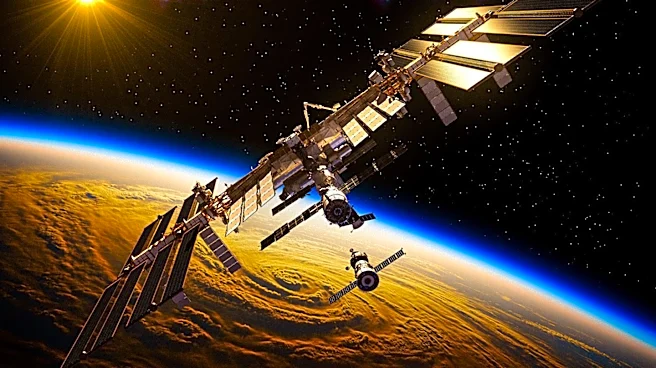
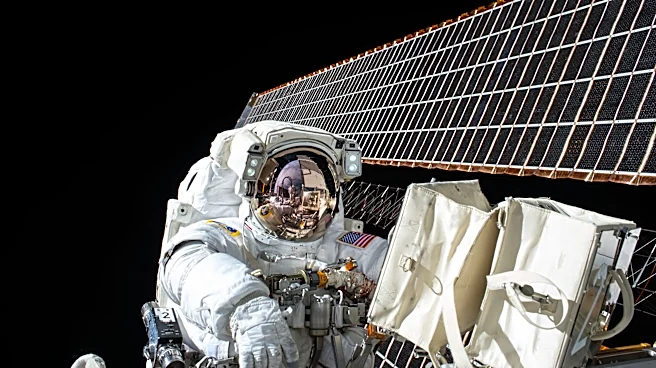
NASA astronaut Anil Menon captured a 'space selfie' on October 29, 2026, during a spacewalk outside the International Space Station (ISS). Menon, alongside Canadian Space Agency (CSA) astronaut Joshua Kutryk, was engaged in installing a new roll-out solar
array on the orbiting laboratory. The image, taken by Menon, shows his arms and the camera reflected in his gold visor, with Earth visible in the background. This event highlights ongoing efforts to upgrade and maintain the power systems of the ISS, a critical component for its continued operation and scientific research. The installation of new solar arrays is part of routine maintenance and enhancement activities designed to ensure the station has sufficient power for its various experiments and life support systems.
Why It's Important?
The successful installation of new roll-out solar arrays on the International Space Station is crucial for maintaining and enhancing the station's operational capabilities. These arrays provide the necessary electrical power for all onboard systems, including scientific instruments, life support, and communication. For the U.S. and its international partners, ensuring a robust power supply is vital for continuing long-duration human spaceflight and microgravity research, which contributes to advancements in various scientific fields. The ability to conduct spacewalks for such complex installations also demonstrates the advanced training and capabilities of NASA astronauts and the reliability of space hardware, reinforcing U.S. leadership in space exploration and technology. This ongoing maintenance ensures the ISS remains a viable platform for future scientific discoveries and technological demonstrations.
What's Next?
Following the successful installation of the new solar array, NASA and its partners will continue to monitor its performance and integrate it into the ISS power grid. Future spacewalks and resupply missions are expected to continue supporting the station's infrastructure and scientific objectives. The data collected from the new solar array will inform future designs for power systems on upcoming missions, including those planned for lunar exploration under the Artemis program. Additionally, the public can expect continued updates from the space station, including further imagery and reports on ongoing research and maintenance activities, as NASA maintains its commitment to transparency and public engagement in space exploration.
Beyond the Headlines
The 'space selfie' taken by astronaut Anil Menon, while a seemingly simple act, carries deeper implications for public engagement and the human element of space exploration. Such images personalize the often-abstract concept of space travel, making it more relatable and inspiring for a global audience. It underscores the blend of advanced technology and human endeavor required for space missions. Furthermore, the continuous upgrades to the ISS, like the solar array installation, reflect a long-term commitment to international collaboration in space, fostering diplomatic ties and shared scientific goals among participating nations. These efforts contribute to a collective human understanding of our place in the universe and the potential for future interplanetary missions.