




What's Happening?
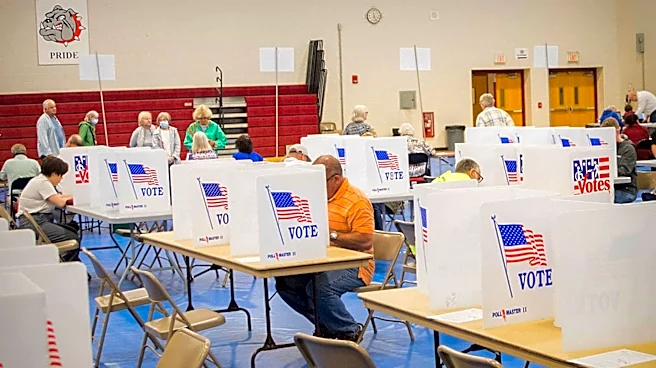
Despite widespread concerns about property taxes, Hoosier voters approved a majority of referendums for public K-12 schools on Tuesday. The Indiana School Boards Association (ISBA) reported that 27 out of 39 referendums on the ballot, approximately 70%,
passed. This outcome is considered a testament to public belief in education, according to ISBA Director Terry Spradlin. However, 12 referendums failed, including those in Anderson, Franklin, Decatur, Sheridan, and Smith-Green school districts. Notably, referendums for Indianapolis Public Schools and MSD of Washington Township passed, while a nearby one in Decatur Township failed. The next opportunity for districts to seek a referendum will not be until November 2028 due to recent changes limiting referendums to even-year General Elections.
Why It's Important?
The passage of most school referendums indicates a continued public willingness to invest in local education, even in an environment of high cost-of-living and property tax anxieties. This support is crucial for school districts facing rising non-discretionary expenses like fuel, utilities, and employee health insurance, which often outpace state funding increases. For the districts where referendums failed, such as Decatur Township, significant budget cuts are anticipated, potentially leading to staffing reductions and programming cuts. This disparity in funding outcomes could exacerbate educational inequalities between districts, impacting student services and staff morale. The new rule limiting referendums to even-year General Elections also means a longer wait for struggling districts to secure additional funding.
What's Next?
The ISBA plans to advocate for a minimum 6% increase in state tuition support for public K-12 schools in the upcoming biennial budget. This proposed increase aims to restore K-12 funding to 2024 levels, leveraging the state's strong revenue performance. For districts where referendums failed, such as Decatur Township, leadership will convene with school boards to evaluate financial situations, likely resulting in difficult decisions regarding staffing and programming cuts. The next two years will be critical for these districts as they navigate budget shortfalls without the immediate option of another referendum. Additionally, the recent midterm elections saw leadership changes, including the ousting of the House Education Committee chair, and an increase in Democratic representation, which could influence future education policy and funding discussions in the General Assembly.
Beyond the Headlines
The mixed results of the school referendums highlight a deeper tension between local control and state-level funding policies for education. While voters in many areas demonstrated a commitment to their schools, the failures in other districts underscore the challenges of relying on property tax-based funding in diverse economic landscapes. The long wait until the next referendum opportunity in 2028 could create significant instability for underfunded districts, potentially leading to a 'brain drain' of educators and a decline in educational quality. This situation also raises questions about equity in education funding across the state and the long-term impact on student outcomes. The push for increased state tuition support by the ISBA reflects a recognition that a more stable and equitable funding mechanism is needed to ensure quality education for all Hoosier students.