


What's Happening?
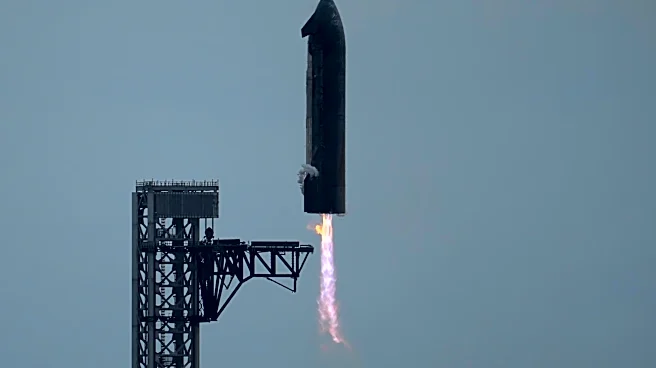
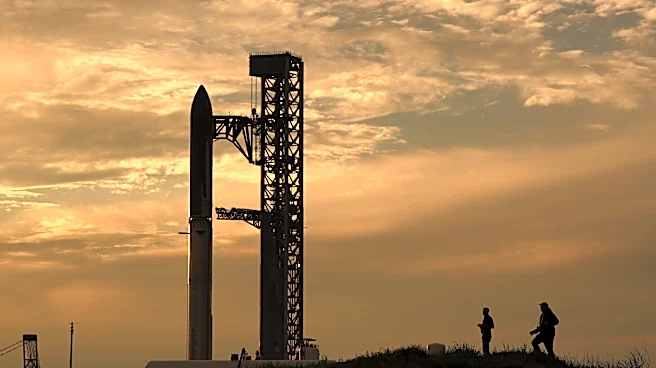
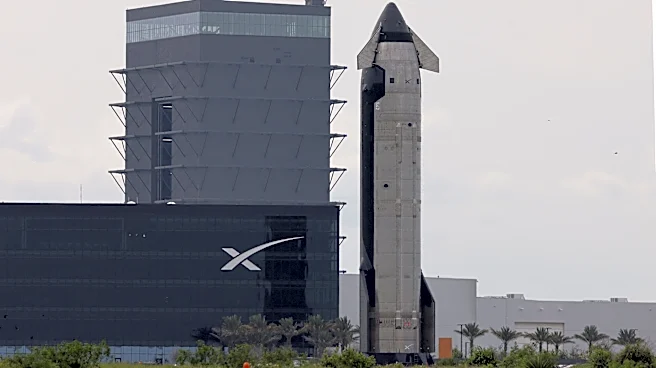
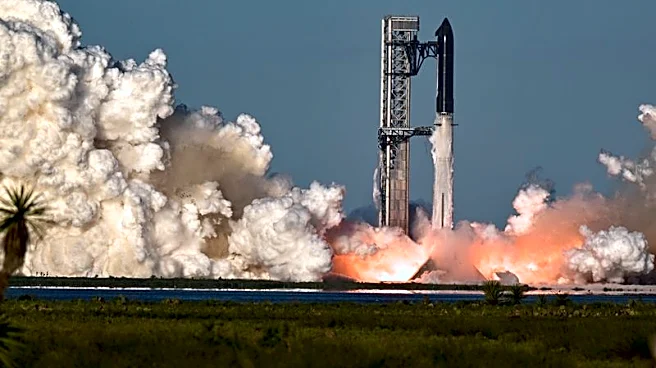
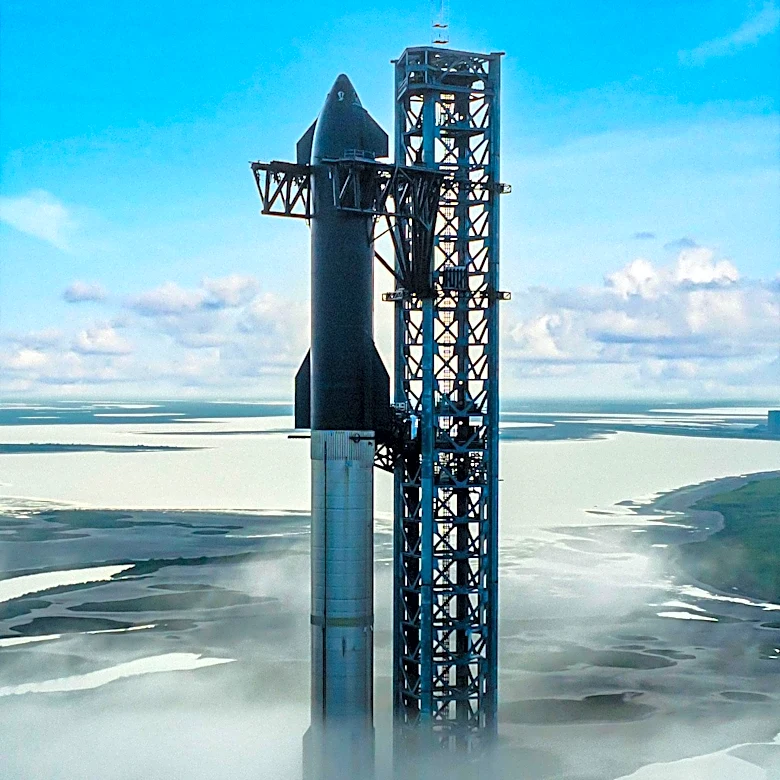
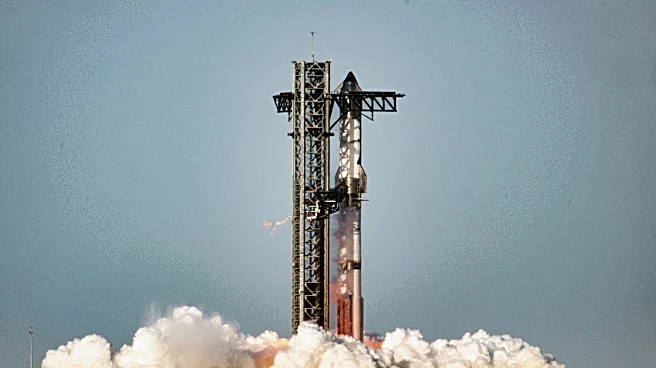
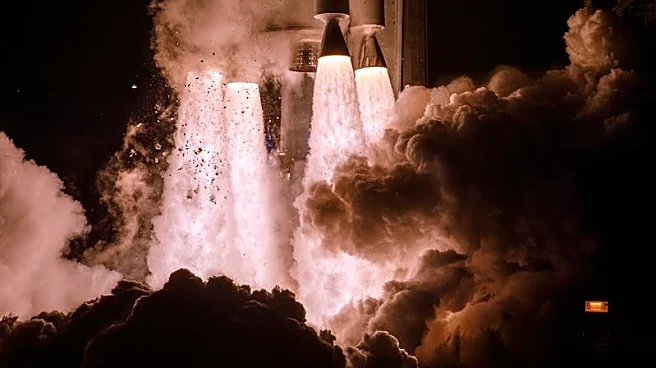
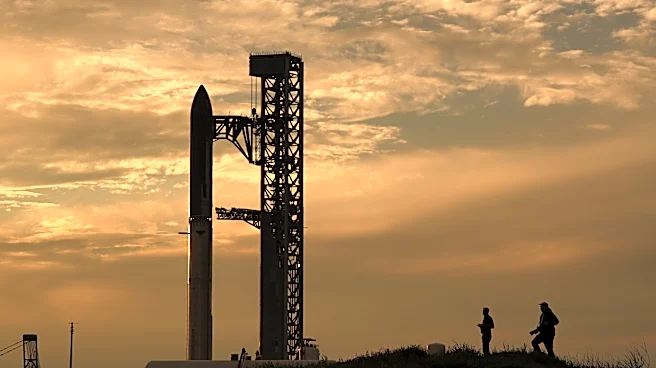
SpaceX successfully recovered a Starship upper stage, Ship 42, from orbit for the first time. The recovery took place on Saturday at Starbase, Texas, where the Mechazilla launch tower's chopstick arms plucked the Ship 42 out of the air. This event followed
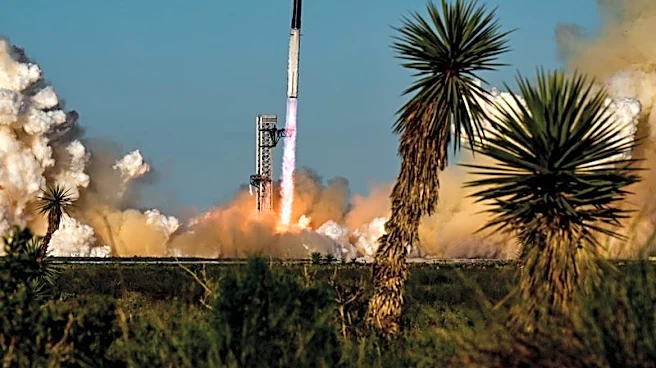
Flight 15, which lifted off on Friday, deployed 26 Starlink V3 satellites, and completed 14 orbits before returning to Earth. After more than 22 hours in flight, Ship 42 re-entered the atmosphere, performed a 'swoosh' maneuver over the Gulf, and executed a landing flip with three Raptor engines for a controlled descent into the tower's arms. SpaceX Communications Manager Dan Huot declared, 'We caught a Starship. And now everything changes.' This marks a significant milestone towards the company's goal of full reusability for its Starship system. All deployed Starlink satellites have reportedly made contact and are beginning to raise their orbits.
Why It's Important?
This successful recovery of a Starship upper stage is a critical step towards achieving full reusability for SpaceX's Starship system, which could revolutionize space travel and satellite deployment. The ability to reuse the upper stage, similar to how airplanes are reused, is central to CEO Elon Musk's vision of significantly reducing the cost and increasing the frequency of space launches. This achievement could pave the way for weekly Starship flights by the first half of 2027, as projected by Musk. Such a rapid launch cadence would have profound implications for industries reliant on satellite technology, including global communication, navigation, and Earth observation. It also accelerates the development of human spaceflight capabilities, potentially making missions to the Moon and Mars more feasible and affordable. The successful deployment of 26 Starlink V3 satellites further expands SpaceX's broadband internet constellation, enhancing global connectivity.
What's Next?
With Ship 42 recovered intact, the immediate next step for SpaceX is to assess its condition and potentially prepare it for another flight, demonstrating the practical reusability of the upper stage. SpaceX President and COO Gwynne Shotwell has indicated that the company aims to re-fly the second stage by early next year, with a focus on ramping up launch cadence as progress is made toward rapid reusability. The company is also investigating an anomaly with Super Heavy Booster 22, which failed to return to the tower, preventing a double catch. Addressing this issue will be crucial for achieving full system reusability. Future developments will likely include further test flights, increased Starlink satellite deployments, and continued efforts to refine the landing and recovery procedures for both the booster and the upper stage, moving closer to the goal of routine, rapid, and fully reusable space launches.
Beyond the Headlines
The successful recovery of Ship 42 signifies a paradigm shift in space logistics, moving beyond the traditional expendable rocket model. This achievement has broader implications for the commercialization of space, potentially opening up new markets and applications that were previously cost-prohibitive. The ability to rapidly and affordably launch payloads could accelerate scientific research, resource extraction in space, and even space tourism. Furthermore, the engineering feat of catching a returning orbital vehicle with robotic arms highlights advancements in precision control and automation, technologies that could find applications beyond the aerospace industry. This milestone also reinforces SpaceX's position as a leader in private space exploration, pushing the boundaries of what is technically feasible and setting new standards for efficiency and sustainability in space operations. The 'Don't Panic' Easter egg and MrBeast's signed heat-shield tile also reflect a cultural integration of space exploration into popular consciousness.