


What's Happening?
The Indo-Dutch collaboration has initiated a transformative approach in agriculture by integrating Artificial Intelligence (AI) to improve farming practices and market access. Marion van Schaik, Agriculture Counsellor to the Kingdom of the Netherlands
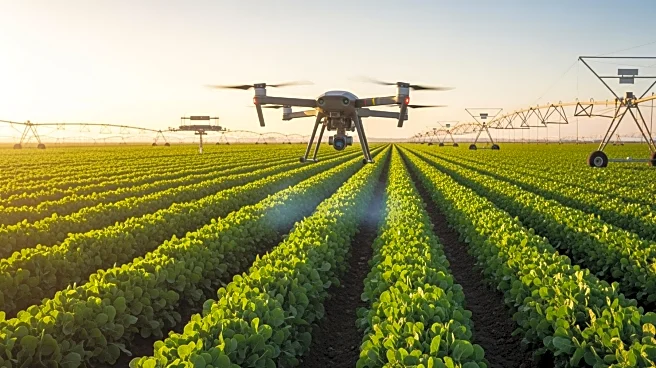
in India, highlighted the use of AI in combining satellite imagery with real-time field data to predict plant diseases, thereby increasing productivity and reducing costs. This initiative, discussed at the AI 4 Agri 2026 summit, aims to make farming more sustainable by reducing pesticide use and addressing economic barriers faced by small farmers. The partnership also focuses on improving market logistics through AI, ensuring fair value distribution and reducing food waste. Wageningen University and Research is leading efforts to develop climate-resilient crops using AI, simulating various climate scenarios to expedite the breeding process.
Why It's Important?
This collaboration signifies a significant shift towards sustainable agriculture, leveraging AI to address both environmental and economic challenges. By predicting plant diseases and optimizing market logistics, the initiative aims to enhance productivity and ensure fair market access for small farmers. The focus on climate-resilient crops is crucial in adapting to changing weather patterns, potentially benefiting global food security. The integration of AI in agriculture could serve as a model for other countries, promoting technological advancements in farming and market systems. This development could lead to increased efficiency, reduced costs, and a more equitable distribution of resources in the agricultural sector.