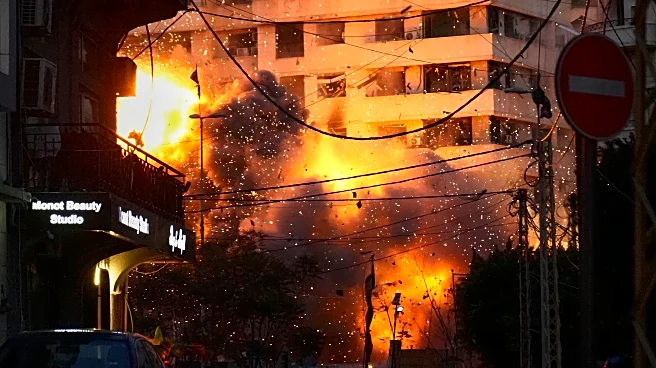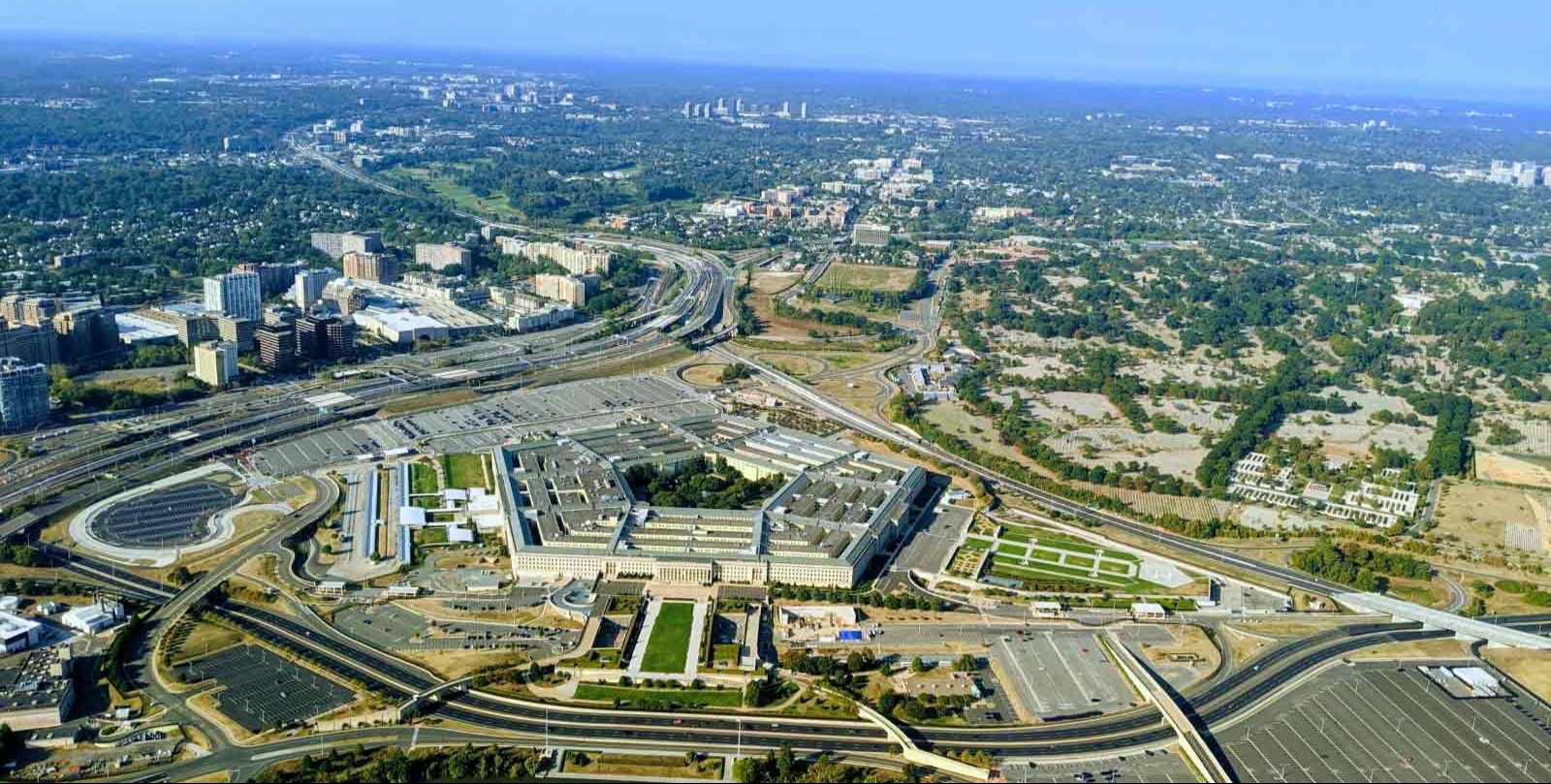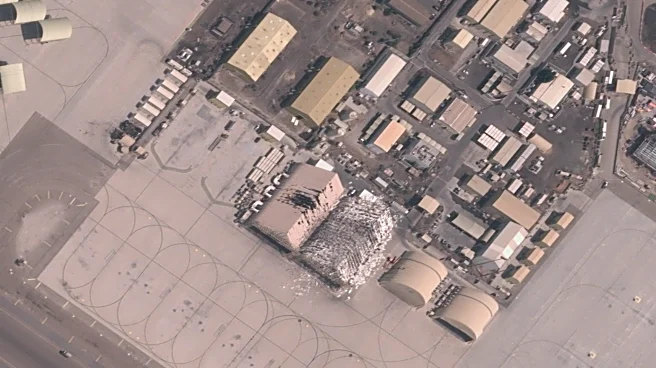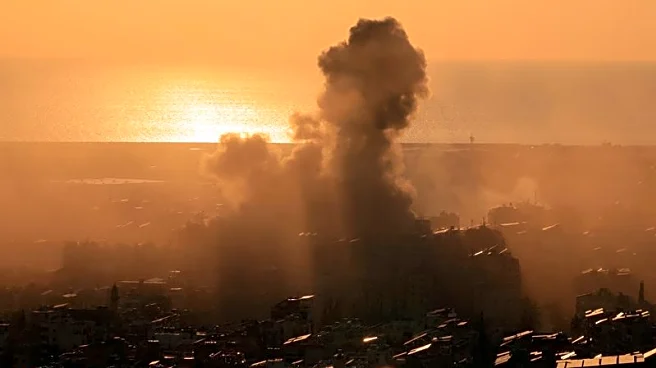


What's Happening?
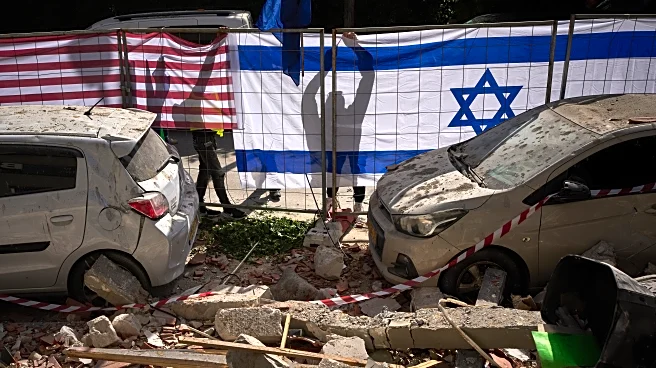
The Israel Defense Forces (IDF) have successfully reduced Hezbollah's ability to conduct a large-scale rocket assault on Israel. This comes after Iran's ballistic missile attack on Israel, which resulted in casualties. The IDF issued a nationwide warning
about Hezbollah's plans for an escalated rocket assault. Despite Hezbollah's previous ability to fire over 200 rockets in a single day, the IDF's recent efforts have limited the group to around 40 rockets. Hezbollah's rockets have mostly fallen short, failing to reach central Israel but impacting northern border towns and the Lower Galilee. The IDF has destroyed approximately 10 Hezbollah rocket launchers before they could be used, a significant increase from previous operations.
Why It's Important?
The IDF's actions are crucial in maintaining Israel's security and preventing large-scale attacks from Hezbollah. The reduction in rocket fire demonstrates the effectiveness of Israel's military strategies and intelligence operations. However, Hezbollah's adaptation to IDF tactics, including decentralizing rocket crews and relocating launch sites, poses ongoing challenges. The group's efforts to increase daily rocket fire from 100 to 150 rockets indicate a persistent threat. The situation underscores the volatile security environment in the region and the need for continued vigilance and strategic planning by Israeli defense forces.
What's Next?
The IDF anticipates further adjustments from Hezbollah as the group seeks to enhance its rocket capabilities. Continued military operations in southern Lebanon aim to dismantle Hezbollah's infrastructure and reduce its ability to organize military actions. The IDF's expanded efforts in areas like Tyre are part of a broader strategy to counter Hezbollah's influence and prevent future attacks. The ongoing conflict may lead to increased international attention and diplomatic efforts to address the security situation.
Beyond the Headlines
The conflict between Israel and Hezbollah has broader implications for regional stability and international relations. The involvement of Iran in supporting Hezbollah adds a layer of complexity, potentially influencing geopolitical dynamics in the Middle East. The situation raises ethical and humanitarian concerns, particularly regarding civilian safety and displacement. Long-term shifts in military tactics and alliances may emerge as both sides adapt to the evolving security landscape.