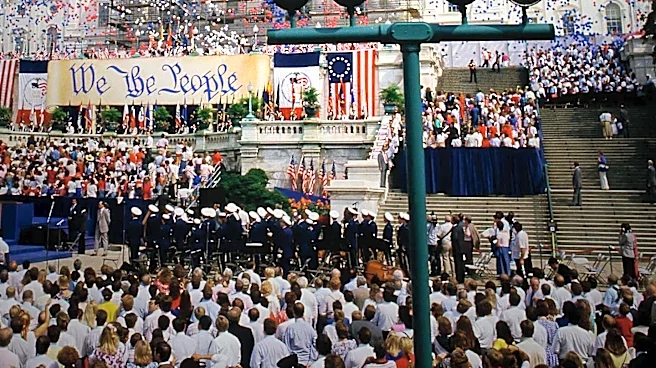






What's Happening?
The 4th of July marks the adoption of the Declaration of Independence in 1776, a pivotal moment when the United States declared its independence from British rule. This decision was the culmination of escalating tensions between the American Colonies
and Great Britain, primarily due to increased taxation and lack of representation in the British Parliament. Events such as the Boston Massacre and the Boston Tea Party exemplified the growing unrest. The Declaration, drafted by Thomas Jefferson and adopted by the Continental Congress, signified the Colonies' formal break from British control, although the Revolutionary War continued until 1783. The 4th of July has since become a symbol of American freedom and is celebrated annually with various traditions, including fireworks, parades, and barbecues.
Why It's Important?
The adoption of the Declaration of Independence was a defining moment in American history, establishing the United States as a sovereign nation and laying the groundwork for its democratic principles. This event not only marked the beginning of a new nation but also set a precedent for other colonies seeking independence. The 4th of July celebrations reinforce national identity and unity, reminding Americans of their shared history and values. The holiday also serves as a reflection on the country's journey towards freedom and the ongoing pursuit of liberty and justice for all its citizens.
What's Next?
As the United States continues to evolve, the 4th of July remains a day for reflection on the nation's progress and challenges. It is an opportunity for Americans to consider the principles of democracy and freedom that the country was founded upon and to engage in discussions about how to address current social and political issues. The holiday encourages civic participation and reminds citizens of their role in shaping the future of the nation.
Beyond the Headlines
The 4th of July also highlights the complexities of American history, including the struggles and contributions of diverse groups in the fight for independence and equality. It prompts a deeper examination of the nation's past, including the experiences of Indigenous peoples, enslaved individuals, and other marginalized communities. Understanding these narratives is crucial for fostering a more inclusive and comprehensive view of American history and identity.