











What's Happening?
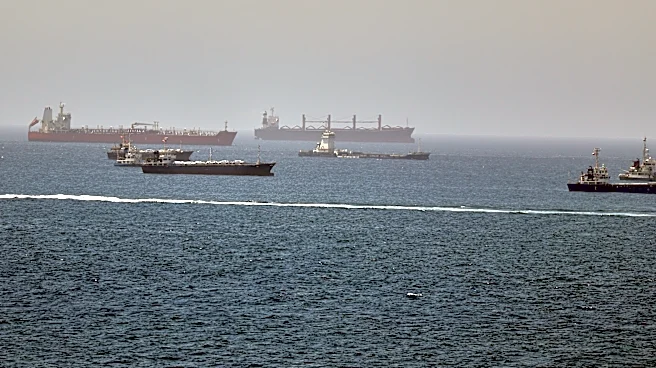
The oil markets are bracing for a summer of volatility as tensions between the U.S. and Iran continue to impact the Strait of Hormuz, a vital oil transit route. Recent missile attacks and geopolitical tensions have led to fluctuating oil prices, with
Brent Crude trading above $73 per barrel. The number of transits through the Strait has decreased, with shippers cautious about potential risks. Middle Eastern oil producers, including Kuwait and Iraq, have ramped up production, but the pace of reopening the Strait remains uncertain. The situation is further complicated by Iran's decision to restrict ship transits to a northern route during a 60-day ceasefire.
Why It's Important?
The Strait of Hormuz is a critical chokepoint for global oil supply, and any disruption can have significant implications for oil prices and market stability. The ongoing tensions between the U.S. and Iran add a layer of geopolitical risk that affects global energy security. Oil-importing countries may face higher energy costs, while oil-exporting nations could experience revenue fluctuations. The situation highlights the interconnectedness of global energy markets and the potential for geopolitical events to influence economic conditions worldwide.
What's Next?
The oil markets will continue to monitor developments in the U.S.-Iran relationship and the security of the Strait of Hormuz. Any escalation in hostilities could lead to further disruptions in oil supply, impacting prices and market stability. Conversely, a resolution to the tensions could stabilize the region and lead to more predictable oil flows. Stakeholders, including governments and energy companies, will need to navigate these uncertainties and adjust their strategies accordingly. The outcome of these geopolitical dynamics will have lasting effects on global energy markets and economic policies.