

What's Happening?
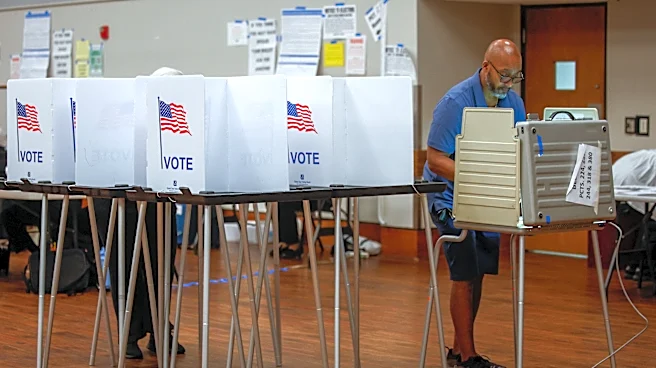
Ron Estes, a Republican member of Congress, has secured victory in the Republican primary for U.S. House District 4, held on August 4, 2026. Estes is among several candidates who have signed the Taxpayer Protection Pledge, a commitment initiated by Americans
for Tax Reform (ATR) to oppose tax increases. The pledge, which was first introduced in 1985, has been signed by over 1,400 elected officials and candidates at both federal and state levels. Estes's victory is part of a broader success for pledge signers in various states, including Virginia, Michigan, Missouri, and Washington. The pledge is seen as a commitment to taxpayers to resist tax hikes and support pro-growth tax reforms.
Why It's Important?
The victory of Ron Estes and other pledge signers underscores a significant political stance within the Republican Party against tax increases. This commitment is particularly relevant in the context of ongoing debates over fiscal policy and economic growth strategies in the U.S. By opposing tax hikes, these candidates align with a broader Republican agenda that prioritizes economic freedom and growth. The pledge serves as a clear demarcation between Republican and Democratic fiscal policies, with the latter often advocating for increased taxes to fund public services. The success of pledge signers in the primaries could influence legislative priorities and shape the economic landscape, potentially affecting businesses, taxpayers, and the overall economy.
What's Next?
Following the primary victories, candidates like Ron Estes will prepare for the general elections, where they will face Democratic opponents. The commitment to the Taxpayer Protection Pledge will likely be a focal point in their campaigns, appealing to voters who prioritize low taxes and economic growth. The outcome of these elections could impact future tax legislation and economic policies. Additionally, the continued signing of the pledge by new candidates suggests that this issue will remain a significant aspect of Republican strategy. Observers will be watching to see how these candidates balance their pledge commitments with the practicalities of governance if elected.