




What's Happening?
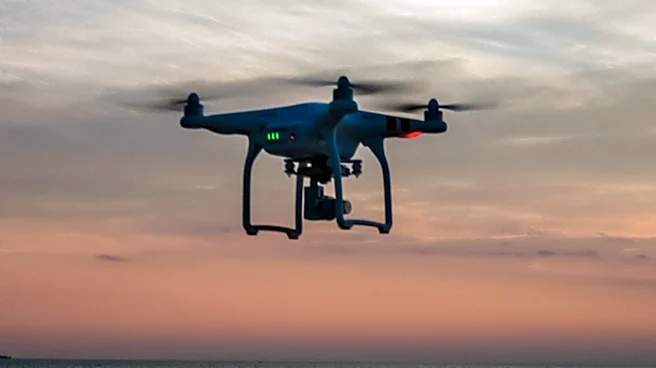
A fishing charter operating out of Pensacola, Florida, Hot Spot Fishing Charters, reported an unusual discovery on Saturday: a large drone floating in the Gulf of Mexico. The group was on a six-hour trip when they encountered the unmanned aerial vehicle
and successfully brought it aboard their vessel. While not independently confirmed, the drone is believed to be an MQM-172, a type of unmanned aerial target aircraft utilized by the U.S. military for training exercises and weapons testing. Following the discovery, the charter reported the find, and the drone was subsequently retrieved later the same day.
Why It's Important?
The discovery of a military-grade drone by a civilian fishing charter in the Gulf of Mexico highlights potential issues with military training operations and the recovery of equipment. While the MQM-172 is designed for testing and training, its presence in civilian-navigated waters could pose navigational hazards or raise questions about the security and recovery protocols for such devices. For the U.S. military, this incident may prompt a review of procedures for tracking and retrieving unmanned aerial targets to prevent them from drifting into public areas. For the fishing industry and other maritime activities in the Gulf, such occurrences underscore the need for vigilance and established reporting mechanisms for unexpected finds that could impact safety or operations.
What's Next?
The immediate next step involves the U.S. military confirming the drone's identity and origin, and likely investigating how it came to be adrift in the Gulf of Mexico. This could lead to a review of the protocols for deploying and recovering MQM-172 drones during training and testing. Depending on the findings, there might be adjustments to flight paths, recovery methods, or public advisories for maritime activities in areas where such training occurs. The incident also serves as a reminder for civilian mariners to report any unusual or potentially hazardous objects encountered at sea to the appropriate authorities.
Beyond the Headlines
This event subtly touches upon the increasing presence of unmanned aerial systems, both military and civilian, in various environments. While this specific drone is a military target, the broader context of drone technology's proliferation raises questions about airspace and waterway management, potential debris, and the interaction between advanced technology and public spaces. It also underscores the role of ordinary citizens, like the fishing charter crew, in encountering and reporting such advanced equipment, bridging the gap between specialized military operations and everyday civilian life. The incident could also spark discussions about environmental impact if such devices are not recovered promptly, potentially contributing to marine debris.