







What's Happening?
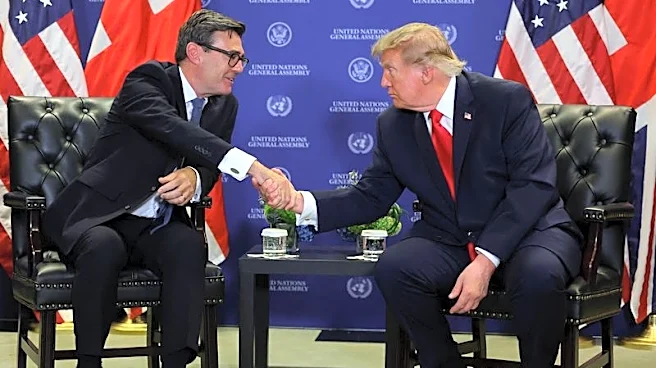
Idaho finds itself significantly impacted by an ongoing trade dispute between the U.S. and Canada. The conflict has escalated with President Trump imposing tariffs on Canadian goods, and Canadian Prime Minister Carney retaliating with dollar-for-dollar
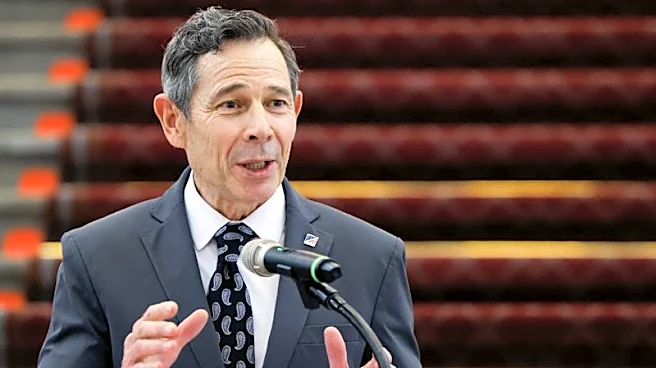
tariffs on American products. This trade war follows a period of heightened rhetoric, including President Trump's threats to rename Lake Ontario 'Lake America' and his dismissal of Canadian officials. Prime Minister Carney, in a speech at Davos, described a 'rupture in the world order' regarding the Canadian/U.S. trading alliance. The situation has led to Canada being offered an 'associate partnership' with the European Union, indicating a potential shift in international trade relations. Boise State Professor Dr. Ross Burkhart noted that 'trust is a very dangerous thing to lose' in this context. Idaho's economy is particularly vulnerable as Canada is its largest trading partner, with approximately $1.8 billion in exports to Canada and $1.2 billion in imports from Canada annually. These trade figures surpass Idaho's combined trade with its next six largest partners, including Taiwan, Mexico, Singapore, Japan, China, and Malaysia.
Why It's Important?
The trade war between the U.S. and Canada carries significant implications for Idaho's economy and potentially for broader U.S. trade policy. Idaho's heavy reliance on trade with Canada means that escalating tariffs directly threaten its agricultural and industrial sectors. Exports from Idaho to Canada include gems, fertilizer, live animals, prepared vegetables, pasta, breads, cereals, dairy products, and agricultural machinery. Conversely, Idaho imports animal feed, softwood lumber, animal and vegetable fats, plastics, salt, sulfur, animal meats, and firearms from Canada. The imposition of 'very targeted and bitter types of tariffs,' as described by Dr. Ross Burkhart, creates economic uncertainty for businesses and consumers in Idaho. This situation highlights the vulnerability of individual states to national trade policies and international disputes. The potential for Canada to strengthen its economic ties with the European Union could also lead to long-term shifts in North American trade dynamics, potentially diminishing the U.S.'s influence in regional trade agreements and impacting various U.S. industries that rely on cross-border supply chains.
What's Next?
The immediate future of the U.S.-Canada trade war remains uncertain, with no clear end in sight. Boise State Professor Dr. Ross Burkhart suggests that the conflict will likely continue until 'the pain is too much' for one or both sides. This implies that further economic measures, including additional tariffs or trade restrictions, could be implemented by either nation. Businesses in Idaho and other border states will need to continue adapting to volatile trade conditions, potentially seeking new markets or adjusting supply chains to mitigate the impact of tariffs. The 'associate partnership' offered by the E.U. to Canada could lead to Canada diversifying its trade relationships, potentially reducing its economic dependence on the U.S. This could have long-term consequences for U.S. trade policy and its standing in global commerce. Stakeholders, including political leaders, industry groups, and agricultural associations, will likely continue to advocate for resolutions that protect their economic interests, but the current trajectory suggests a prolonged period of trade tension.
Beyond the Headlines
Beyond the immediate economic impact, the U.S.-Canada trade war raises deeper questions about international diplomacy, national sovereignty, and the future of global trade alliances. President Trump's rhetoric, including personal attacks on Canadian officials and symbolic threats like renaming Lake Ontario, underscores a shift towards more confrontational international relations. This approach challenges traditional diplomatic norms and could set precedents for how nations engage in trade disputes. The Canadian Prime Minister's response, including seeking closer ties with the E.U., indicates a strategic realignment that could reshape geopolitical alliances. This situation highlights the ethical considerations of using economic leverage as a political tool and the potential for such actions to erode long-standing international trust. The long-term implications could include a more fragmented global trade system, where nations prioritize bilateral agreements and regional blocs over multilateral frameworks, potentially leading to increased protectionism and reduced global economic integration. The cultural and social ties between the U.S. and Canada, often characterized by mutual respect and cooperation, are also being tested by these escalating tensions.