





What's Happening?
Jonah Water Special Utility District (SUD) has announced the immediate implementation of Stage 2 drought restrictions. This measure is compulsory for all customers and aims to reduce water usage to prevent further drought contingency actions or service
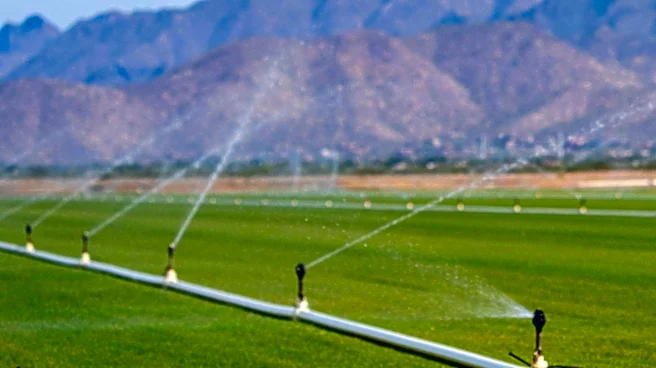
interruptions. The restrictions include mandatory adjustments to water use, such as limiting landscape irrigation to specific days and times based on address numbers. Additionally, washing vehicles is only permitted on designated watering days, and recreational water use, including yard toys and filling pools, must be reduced. Jonah Water SUD is actively monitoring drought conditions in the area and has provided contact information for customers with questions or concerns regarding these new regulations. The utility district emphasizes the need for customer cooperation to manage the current water supply challenges.
Why It's Important?
The implementation of Stage 2 drought restrictions by Jonah Water SUD highlights the increasing pressure on water resources in various U.S. regions due to persistent dry conditions. Such measures directly impact daily life for residents, requiring significant changes in water consumption habits. For businesses, particularly those reliant on outdoor water use like landscaping services or car washes, these restrictions can lead to operational adjustments and potential revenue impacts. The broader economic implications include increased costs for water management, potential strain on agricultural sectors, and a reevaluation of long-term water infrastructure planning. These restrictions also underscore the growing need for sustainable water practices and conservation efforts across communities to mitigate the effects of climate change and ensure future water security. The situation in Jonah Water SUD reflects a national trend where local utilities are forced to take proactive steps to manage dwindling water supplies.
What's Next?
Jonah Water SUD will continue to monitor drought conditions and assess the effectiveness of the Stage 2 restrictions. Depending on future rainfall and water levels, the district may either ease or escalate these restrictions. Customers should anticipate ongoing communication from Jonah Water SUD regarding any changes to the current regulations. There is a possibility of moving to more stringent stages of drought contingency if water conservation targets are not met or if dry conditions persist. This could involve further limitations on outdoor water use or even indoor water conservation mandates. The utility district will likely engage in public awareness campaigns to educate residents on water-saving techniques and the importance of adherence to the restrictions. Local businesses and residents will need to adapt to these evolving water management strategies, potentially investing in water-efficient technologies or altering their routines to comply with the regulations.
Beyond the Headlines
The situation with Jonah Water SUD's drought restrictions points to a larger national challenge concerning water scarcity and climate resilience. Beyond immediate conservation, these events often spur discussions about long-term infrastructure investments, such as desalination plants, wastewater recycling, and improved water storage solutions. There's also an ethical dimension, as communities grapple with equitable water distribution during shortages, balancing the needs of residential, agricultural, and industrial users. The economic impact extends to property values, as access to reliable water becomes a critical factor. Furthermore, these restrictions can influence urban planning and development, encouraging the adoption of drought-tolerant landscaping and water-efficient building codes. The ongoing drought conditions serve as a stark reminder of the interconnectedness of environmental health, economic stability, and community well-being, prompting a reevaluation of how water resources are managed and valued in the U.S.