


What's Happening?
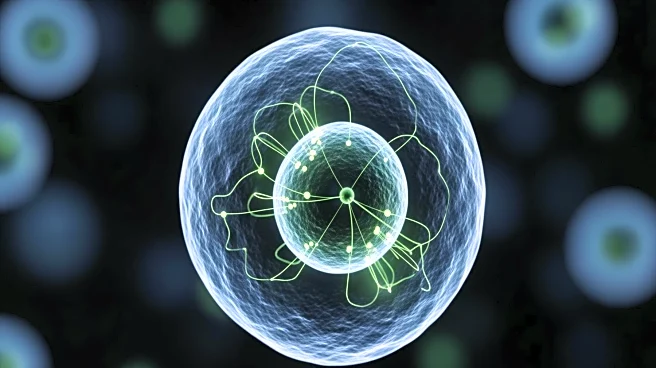
Researchers at Harvard University have discovered that the single-celled organism Stentor coeruleus is capable of associative learning, a complex form of learning previously thought to require a brain or nervous system. This discovery was made through
conditioning experiments similar to those used by Ivan Pavlov, where Stentor was exposed to a sequence of weak and strong taps. Initially, the organism contracted in response to the strong tap, but over time, it began to associate the weak tap with the impending strong tap, demonstrating a learned response. This finding suggests that associative learning may have evolved long before the development of multicellular nervous systems.
Why It's Important?
The discovery of associative learning in Stentor coeruleus challenges the traditional understanding of cognitive abilities in simple organisms. It suggests that the capacity for learning and memory storage might not be exclusive to complex, multicellular organisms with nervous systems. This could have significant implications for the study of evolutionary biology, as it indicates that such cognitive processes may have ancient origins. Additionally, understanding how single-celled organisms like Stentor store and process information could provide insights into the fundamental mechanisms of learning and memory, potentially influencing research in neuroscience and artificial intelligence.
What's Next?
Future research will likely focus on uncovering the mechanisms by which Stentor coeruleus stores and processes information. Scientists are particularly interested in understanding how memory is stored at the cellular level in the absence of a nervous system. This could involve studying the role of cellular receptors and calcium flow in the organism's response to stimuli. Additionally, researchers may explore whether other unicellular organisms possess similar learning capabilities, which could further expand our understanding of cognitive processes in simple life forms.
Beyond the Headlines
The ability of a single-celled organism to perform associative learning raises questions about the minimal requirements for cognitive processes. It challenges the notion that complex behaviors are solely the domain of organisms with brains and nervous systems. This discovery could lead to a reevaluation of the cognitive abilities of other simple organisms and inspire new approaches in the study of intelligence and learning. Furthermore, it highlights the potential for discovering previously unrecognized forms of cognition in the natural world.