







What's Happening?
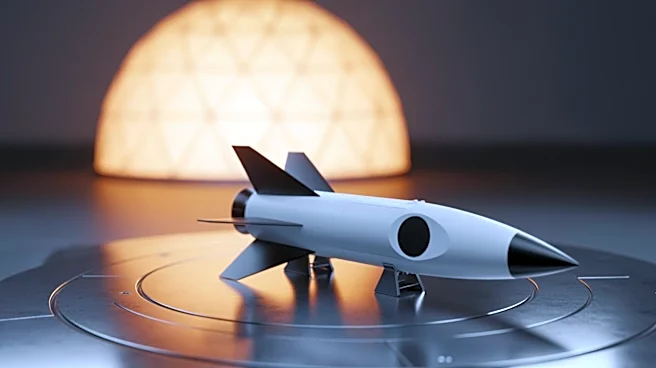
The U.S. Space Force has selected twelve companies to develop space-based interceptors for the Golden Dome missile defense system. This initiative, part of President Trump's defense strategy, involves contracts worth up to $3.2 billion. The selected firms
include major defense contractors like Lockheed Martin and Northrop Grumman, as well as smaller companies. The project aims to deploy satellites capable of intercepting missiles at various stages of their trajectory. Despite budgetary challenges, the Space Force is optimistic about demonstrating initial capabilities by 2028. The project is part of a broader effort to enhance U.S. missile defense capabilities in response to evolving threats.
Why It's Important?
The development of the Golden Dome system represents a significant advancement in U.S. missile defense technology. By leveraging space-based interceptors, the U.S. aims to create a more robust and flexible defense against missile threats. This initiative not only strengthens national security but also positions the U.S. as a leader in space defense technology. The involvement of both traditional and non-traditional defense contractors highlights the importance of innovation and competition in achieving these goals. However, the project's reliance on yet-to-be-approved funding poses challenges that could impact its timeline and scope.
What's Next?
The Space Force plans to continue its collaboration with industry partners to refine the Golden Dome system's capabilities. As the project progresses, it will require ongoing support from Congress and the administration to secure necessary funding. The success of this initiative could influence future defense policies and budget allocations, emphasizing the need for continued investment in space-based defense technologies. Additionally, the project's outcomes may impact international relations, as other nations respond to the U.S.'s advancements in missile defense.