




What's Happening?
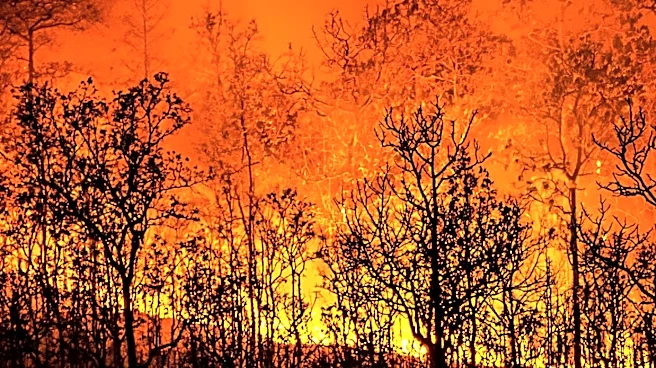
Colorado Governor Jared Polis has formally requested a Major Disaster Declaration from President Trump and the Federal Emergency Management Agency (FEMA). This request comes in the wake of two significant large-scale wildfires that have devastated parts
of Colorado this summer. These fires have resulted in the destruction of hundreds of homes and have severely disrupted local economies across the affected regions. The declaration, if approved, would unlock crucial federal assistance and resources to aid in the recovery and rebuilding efforts for the communities impacted by these natural disasters. Governor Polis's action underscores the severity of the damage and the extensive needs of the affected areas, highlighting the substantial impact these wildfires have had on residents and local businesses.
Why It's Important?
A Major Disaster Declaration is a critical step in providing comprehensive federal support to states grappling with the aftermath of catastrophic events. For Colorado, this declaration would mean access to a wide range of federal programs, including individual assistance for displaced residents, public assistance for infrastructure repair, and hazard mitigation grants to prevent future damage. The destruction of hundreds of homes represents a significant loss for families and communities, necessitating substantial financial and logistical aid for housing, personal property, and emotional support. Furthermore, the disruption to local economies, which often rely on tourism and small businesses, can have long-lasting effects without federal intervention. This request highlights the increasing frequency and intensity of wildfires in the Western U.S., placing a growing burden on state and local resources and emphasizing the vital role of federal assistance in disaster recovery and resilience.
What's Next?
Following Governor Polis's request, President Trump and FEMA will review the damage assessments and the state's capacity to respond. The approval process typically involves a thorough evaluation of the scope of the disaster and the resources available at the state and local levels. If approved, federal agencies will coordinate with Colorado state and local authorities to implement various aid programs. This could include setting up disaster recovery centers, providing temporary housing assistance, offering low-interest loans for rebuilding, and funding for debris removal. The focus will then shift to long-term recovery efforts, including rebuilding homes, restoring infrastructure, and supporting economic revitalization in the affected areas. The decision from the federal government is anticipated to be a crucial determinant in the speed and effectiveness of Colorado's recovery from these devastating wildfires.
Beyond the Headlines
The recurring nature of large-scale wildfires in Colorado and other Western states points to broader environmental and policy challenges. Beyond immediate disaster relief, this situation underscores the need for enhanced wildfire prevention strategies, including forest management, controlled burns, and community-level preparedness. The economic impact extends beyond direct property damage, affecting insurance markets, property values, and the long-term viability of communities in fire-prone regions. This event also highlights the complex interplay between climate patterns, land use, and human development in exacerbating natural disasters. The federal response to such requests often sets precedents for future disaster aid, influencing national policies on climate resilience and emergency management. The psychological toll on affected residents, who face displacement and loss, also represents a significant, often overlooked, aspect of these disasters, requiring sustained community support and mental health resources.