






What's Happening?
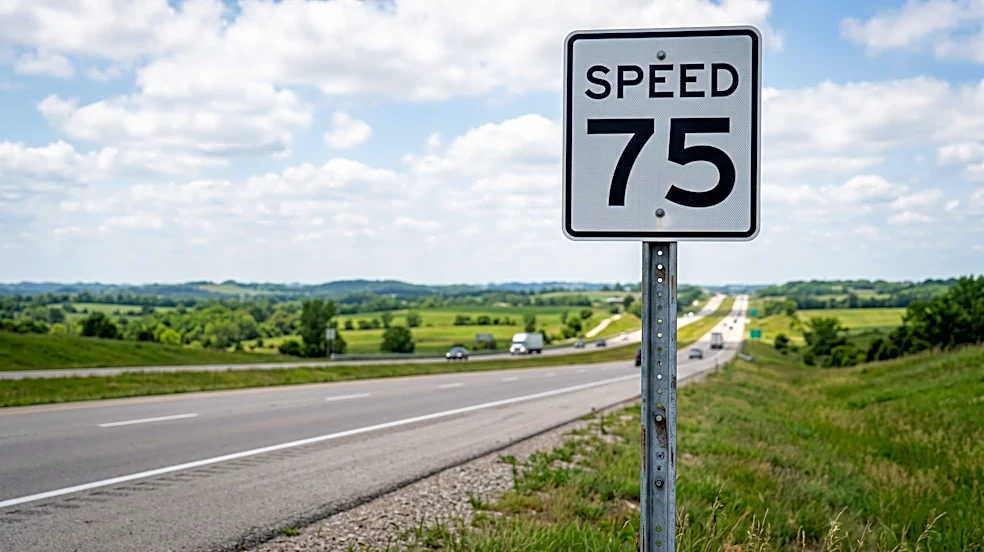
Missouri Governor Mike Kehoe has signed legislation that will raise the speed limit to 75 mph on specific rural stretches of Interstates 29, 35, and 49 in western Missouri. The Missouri Department of Transportation (MoDOT) has identified the exact segments
where the new speed limit will apply. These include parts of I-29 from Andrew County to the Iowa border, I-35 from Cameron to the Iowa border, and I-49 from the Arkansas border north to Exit 24 and from Exit 56 north to Nevada. MoDOT's decision followed a comprehensive review of various factors, such as traffic volume, truck volume, current speed data, crash history, terrain, and road design. MoDOT crews are scheduled to begin updating speed limit signs this fall.
Why It's Important?
This change is significant for Missouri drivers and transportation policy. The increased speed limit aims to improve the efficiency of travel on these rural interstate segments, potentially reducing travel times for commuters and commercial traffic. However, it also raises safety concerns, as highlighted by MoDOT Director Ed Hassinger, who noted that faster speeds reduce reaction time for motorists. The Missouri State Highway Patrol emphasized that safety remains a priority, urging drivers to obey posted speed limits. The decision reflects a balance between facilitating faster travel and maintaining road safety, with MoDOT indicating that it will continue to evaluate the safety implications and may adjust speed limits if necessary. This move could influence similar discussions in other states regarding speed limit adjustments on rural interstates.
What's Next?
MoDOT crews will proceed with updating the speed limit signs on the designated sections of Interstates 29, 35, and 49 this fall. Drivers are advised to adhere to the new posted speed limits. The Missouri Department of Transportation plans to continuously monitor the safety of these changes, and there is a possibility that speed limits could be reverted to 70 mph if safety concerns arise. This ongoing evaluation will be crucial in determining the long-term impact of the increased speed limits on traffic safety and efficiency in Missouri. The implementation will likely be watched by other states considering similar legislative changes.
Beyond the Headlines
The decision to increase speed limits on rural interstates touches upon broader societal debates concerning individual freedom versus public safety. While higher speed limits can be seen as a measure to enhance economic efficiency and reduce travel times, they also introduce increased risks of accidents and fatalities. This policy change could lead to discussions about driver education, enforcement strategies, and the design of future road infrastructure to accommodate higher speeds safely. It also highlights the ongoing challenge for state governments to balance economic benefits with public welfare, particularly in areas like transportation where the consequences of policy decisions can be immediate and severe. The long-term data collected by MoDOT will be vital in informing future policy decisions regarding speed limits and road safety.