
What's Happening?
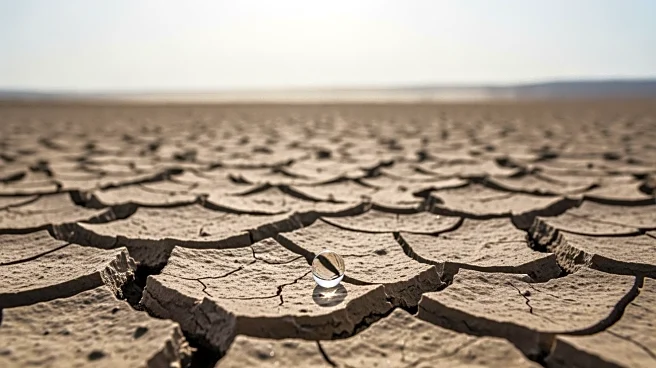
A United Nations report has highlighted a critical global issue, describing the onset of a 'global water bankruptcy.' The report, published by the UN University's Institute for Water, Environment and Health,
indicates that three-quarters of the world's population, approximately 6.1 billion people, live in regions where freshwater supplies are insecure. The report emphasizes that four billion people experience severe water scarcity for at least one month each year. The term 'water bankruptcy' is used to describe the irreversible depletion of freshwater resources due to chronic overuse, pollution, and climate change. The report also notes that cities are increasingly facing 'Day Zero' events, where municipal water systems are on the brink of collapse. The situation is exacerbated by global warming, which increases water demand and makes natural water supplies less predictable.
Why It's Important?
The implications of this report are significant for global and U.S. policy, as water scarcity can lead to severe socio-economic and political challenges. Water scarcity affects agriculture, industry, and domestic use, potentially leading to increased migration, economic instability, and geopolitical tensions. In the U.S., regions already experiencing water stress, such as the western states, could face heightened challenges. The report calls for urgent policy interventions to manage water resources more sustainably and to prevent further degradation. The recognition of 'water bankruptcy' in policy debates could lead to more stringent regulations on water use and pollution, impacting industries reliant on water resources.
What's Next?
The report's release precedes important international discussions, including the upcoming UN Water Conference in December 2026. These meetings aim to address global water management strategies and establish a framework for monitoring water resources. The U.S. decision to withdraw from UN Water and other international organizations may affect its influence in these discussions. However, the need for collaborative international efforts to address water scarcity remains critical. Policymakers and stakeholders are expected to focus on sustainable water management practices and the development of technologies to improve water efficiency and quality.