
What's Happening?
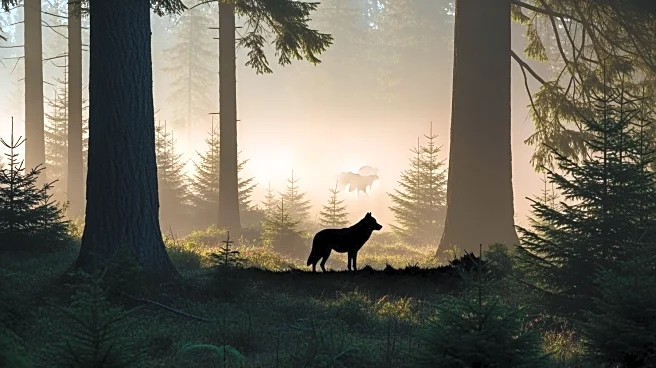
A wolf has been spotted in Los Angeles County for the first time in over 100 years, according to officials from the California Department of Fish and Wildlife. This rare sighting marks a significant event
as wolves have been absent from the region for a century. The presence of the wolf was confirmed through tracking and monitoring efforts by wildlife officials, who are keen to understand the implications of this development. The wolf's appearance in the area is seen as a potential sign of the species' gradual return to its historical range, which has been impacted by human activities and habitat loss over the years.
Why It's Important?
The return of a wolf to Los Angeles County is significant for several reasons. Ecologically, it suggests a possible recovery of the species in areas where they were once native, indicating improvements in habitat conditions and conservation efforts. Wolves play a crucial role in maintaining the balance of ecosystems by controlling prey populations, which can lead to healthier forests and grasslands. This sighting could also influence public policy and conservation strategies, potentially leading to increased efforts to protect and manage wildlife habitats. Additionally, it may spark discussions about human-wildlife coexistence in urban and suburban areas, as the presence of large predators can raise concerns about safety and livestock protection.
What's Next?
Wildlife officials are likely to continue monitoring the wolf's movements to gather more data on its behavior and habitat use. This information will be crucial in developing management plans that ensure both the safety of the wolf and the local community. Public education campaigns may be initiated to inform residents about living in proximity to wolves and how to minimize potential conflicts. Furthermore, this event could lead to collaborations between state agencies, conservation groups, and local communities to enhance wildlife corridors and connectivity, facilitating the natural movement of species across the landscape.