
What's Happening?
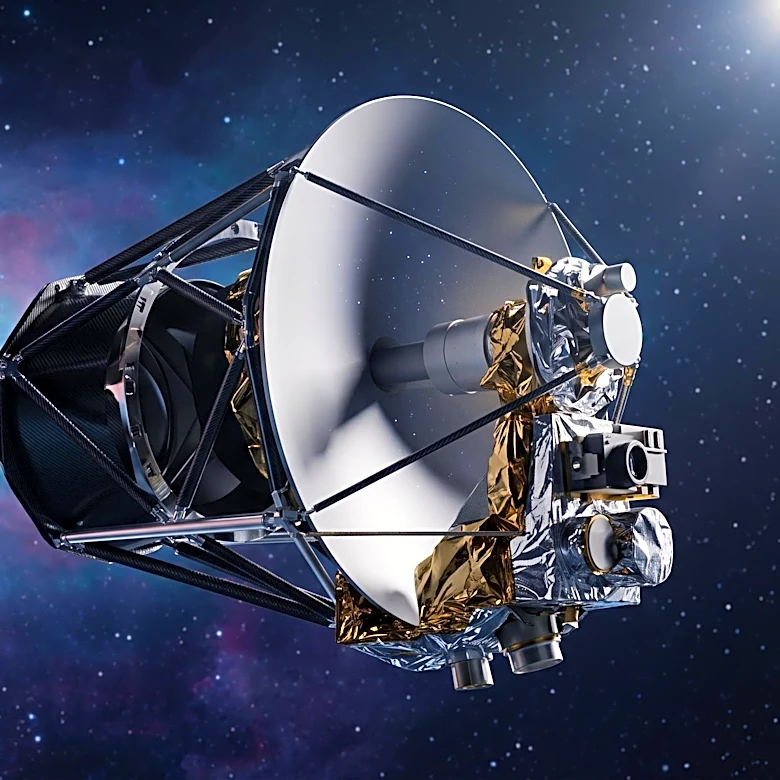
AstroForge, a California-based asteroid-mining company, is set to launch Autonomy-1, the world's first fully autonomous space mission, in early 2027. This mission will be carried aboard the inaugural flight of Stoke Space's Nova Pathfinder rocket. Autonomy-1 will operate
independently, without any ground commands, utilizing AstroForge's newly developed Solo spacecraft intelligence model. According to AstroForge CEO and co-founder Matt Gialich, Solo is designed to autonomously coordinate a spacecraft's onboard functions, allowing it to make real-time decisions during flight. The mission objective for Autonomy-1 is straightforward: after separating from its launch vehicle, the spacecraft will not receive any commands from Earth, only transmitting telemetry and science data back.
Why It's Important?
This mission represents a significant leap in spacecraft engineering, aiming to achieve the 'holy grail' of full mission autonomy. The ability to operate spacecraft without constant human intervention is crucial for AstroForge's long-term goal of unlocking the resources of the solar system, particularly through asteroid mining. Manually controlling a large fleet of spacecraft for such operations would be prohibitively expensive and complex. Solo's capability to process data and make decisions independently will drastically reduce operational costs and increase efficiency for future deep-space missions. This technology could revolutionize space exploration and resource utilization, making ambitious projects like asteroid mining more feasible and scalable.
What's Next?
AstroForge plans to implement Solo in a stepwise fashion. The intelligence model will first fly on the DeepSpace-2 mission, which will launch on a SpaceX Falcon 9 rocket alongside Intuitive Machines' third robotic lunar lander later this year. In this initial flight, Solo will operate in 'shadow mode,' processing spacecraft data and making decisions without implementing them. Autonomy-1 in 2027 will be a full-scale demonstration of Solo in Earth orbit, where it will autonomously manage the mission and support a NASA heliophysics instrument called COMPASS. AstroForge has previously launched two missions, Brokkr-1 and Odin, with varying degrees of success, providing valuable experience for these upcoming autonomous endeavors.
Beyond the Headlines
The development of fully autonomous spacecraft like those powered by Solo has profound implications for the future of space exploration and humanity's reach beyond Earth. By removing the need for constant human oversight, missions can become more resilient to communication delays, operate in more distant and hazardous environments, and potentially explore regions of space currently inaccessible. This shift towards autonomy could accelerate the pace of scientific discovery and resource extraction in space, opening new economic frontiers. However, it also raises ethical and regulatory questions regarding the decision-making authority of AI in space, the potential for unforeseen consequences, and the long-term impact on human roles in space operations. The success of Autonomy-1 will be a critical step in addressing these complex considerations.