
What's Happening?
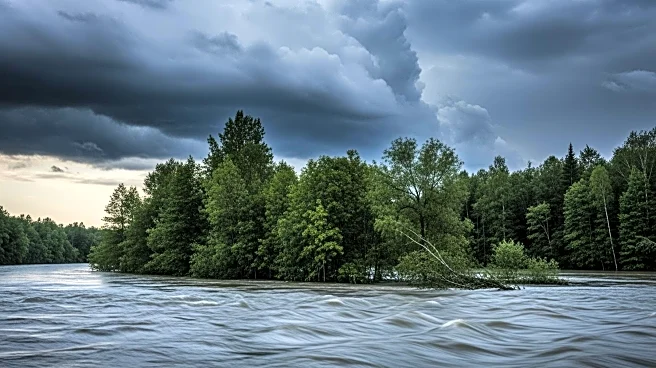
The Pacific Northwest is experiencing significant weather challenges as residents brace for another round of heavy rain following a powerful storm that hit the region. This storm has already caused rivers
to swell, roads to close, and necessitated high water rescues. The National Weather Service has issued warnings for major or record flooding along the Skagit and Snohomish rivers in Washington, with potential overtopping of levees. Schools have been closed or delayed due to flooding concerns, and landslides have led to road closures. In some areas, rain rates have reached impressive levels, with Mount Rainier recording over three inches of rain in just ten hours. Emergency services have been actively rescuing individuals stranded by rising waters, and the state's Emergency Operations Center has been activated at its highest level. The weather service forecasts continued heavy rainfall and potential flooding, with another storm system expected to arrive soon.
Why It's Important?
The ongoing severe weather in the Pacific Northwest highlights the region's vulnerability to extreme weather events, which can have significant impacts on infrastructure, safety, and daily life. The flooding poses risks to homes, businesses, and transportation networks, potentially leading to economic disruptions. The activation of emergency services and the need for rescues underscore the immediate threat to public safety. Additionally, the situation raises concerns about the adequacy of current flood management and emergency response strategies in the face of increasingly frequent and severe weather patterns, possibly linked to broader climate change trends. The events in the Pacific Northwest serve as a critical reminder of the need for robust infrastructure and preparedness plans to mitigate the impacts of such natural disasters.
What's Next?
As the region continues to deal with the aftermath of the current storm, attention will turn to the next expected weather system, which could exacerbate existing flooding and damage. Authorities will likely focus on reinforcing flood defenses and ensuring that emergency services are prepared for further rescues and evacuations. Residents may need to remain vigilant and prepared for additional disruptions. In the longer term, this series of storms may prompt discussions among policymakers and community leaders about investing in more resilient infrastructure and improving emergency response capabilities to better handle future weather-related challenges.