






What's Happening?
Immigration and Customs Enforcement (ICE) has come under scrutiny for reducing the frequency of inspections at its detention facilities. Previously, most facilities were inspected twice a year, but a policy shift has led to inspections occurring annually
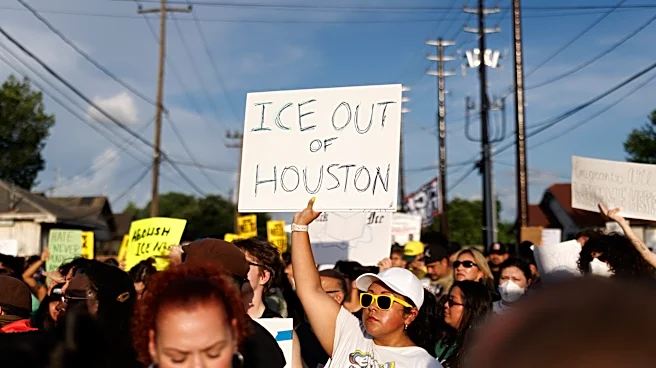
or biennially, depending on the facility type. This change has raised concerns among immigration custody experts who argue that less frequent inspections weaken an already flawed oversight mechanism. The Trump administration's intensified deportation efforts have increased the detention population, leading to heightened concerns about conditions within these facilities. Reports of spoiled food, inadequate medical care, and dangerous conditions have sparked protests and hunger strikes. A government review recently highlighted unsafe conditions at Camp East Montana, ICE's largest facility. Despite these issues, ICE maintains that its compliance program is robust and that inspection frequency is determined by facility type and capacity.
Why It's Important?
The reduction in inspection frequency at ICE detention facilities has significant implications for the health and safety of detainees. With the detention population at its highest, the potential for neglect and abuse increases if oversight is diminished. The policy change could lead to more severe deficiencies going unaddressed, impacting detainees' rights and well-being. The decision to reduce inspections also reflects broader policy shifts under the Trump administration, which has sought to encourage local law enforcement to use their jails as detention facilities. This move could lead to a lack of accountability and transparency, as local facilities may not adhere to the same standards as federal ones. The situation underscores the need for effective oversight to ensure that detention conditions meet legal and humanitarian standards.
What's Next?
The future of ICE detention facility inspections remains uncertain. While ICE plans to inspect all dedicated facilities by the end of the fiscal year, the effectiveness of these inspections is in question. Critics argue that the current oversight mechanisms are insufficient and that more frequent inspections are necessary to ensure compliance with detention standards. The Department of Homeland Security's decision to cut other oversight mechanisms, such as the Office of the Immigration Detention Ombudsman, further complicates the situation. Lawmakers and advocacy groups may continue to push for increased transparency and accountability, potentially leading to legal challenges or policy reforms. The ongoing debate highlights the need for a balanced approach that addresses both security concerns and the rights of detainees.