



What's Happening?
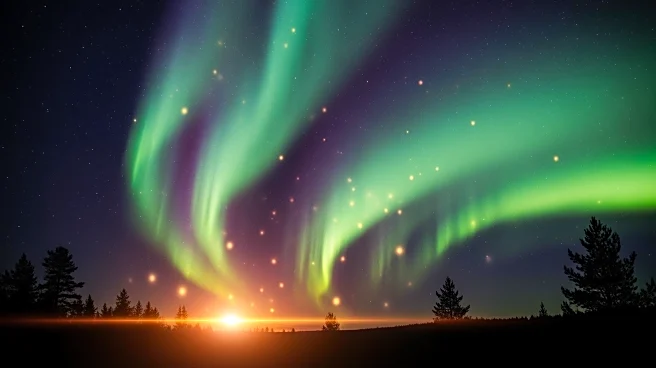
A powerful solar storm, caused by a coronal mass ejection (CME) from the Sun, resulted in a spectacular display of the Northern Lights on January 19. This event was triggered by a CME that erupted from the Sun's corona during a significant X1.9 solar flare.
The CME traveled the approximately 91 million miles from the Sun to Earth in about a day, causing geomagnetic storms that fluctuated between G1 and G4 levels. These storms led to the appearance of auroras, typically seen near the poles, in mid-latitude regions such as Germany and the southwestern United States. The auroras, displaying vibrant red, green, and magenta hues, lasted for several hours as the CME continued to interact with Earth's magnetic field.
Why It's Important?
The occurrence of auroras in mid-latitude regions is a rare phenomenon, highlighting the intensity of the solar storm. Such events can have significant implications for Earth's magnetic field and can disrupt satellite operations, GPS systems, and power grids. The widespread visibility of the auroras also underscores the potential for increased solar activity to impact regions not typically affected by such phenomena. This event serves as a reminder of the need for monitoring and preparedness for solar storms, which can have far-reaching effects on technology and infrastructure.
What's Next?
As solar activity continues, scientists and space weather agencies will likely increase monitoring efforts to predict and mitigate the impacts of future solar storms. This includes improving forecasting models and communication strategies to alert affected regions. The event may also prompt further research into the effects of geomagnetic storms on Earth's systems and the development of technologies to protect critical infrastructure from solar-induced disruptions.
Beyond the Headlines
The cultural and scientific interest in auroras may lead to increased public engagement with space weather phenomena. The widespread sharing of images and experiences from this event could enhance public awareness and appreciation of the natural world. Additionally, the event may inspire educational initiatives to teach about the science behind solar storms and their effects on Earth.