






What's Happening?
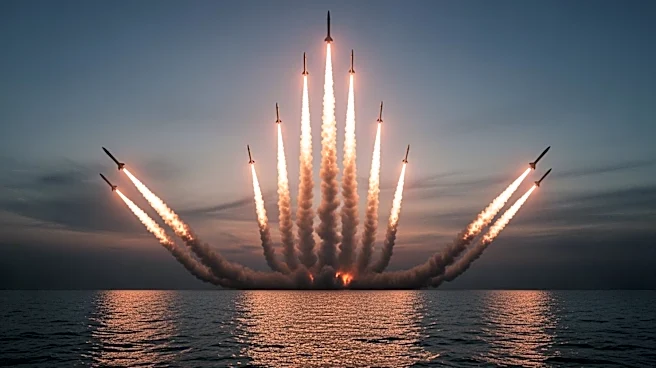
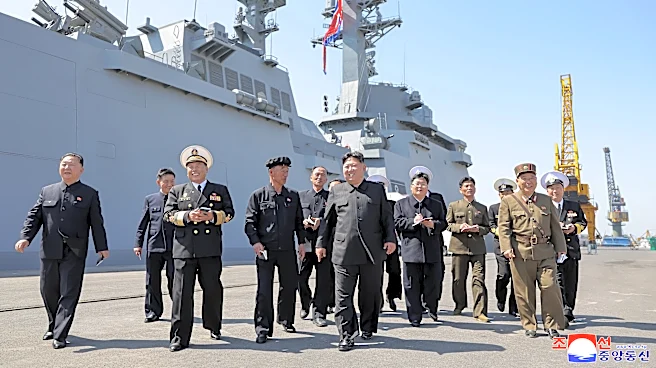
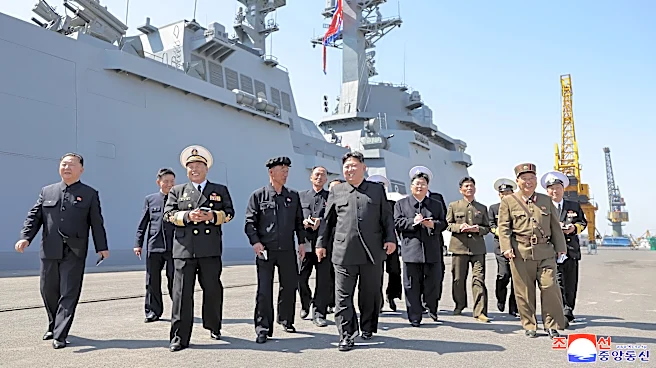
North Korea has conducted a test launch of ballistic missiles equipped with cluster bomb warheads, marking the second such test this month. The launch, observed by North Korean leader Kim Jong Un and his daughter, involved five upgraded Hwasong-11 Ra
ballistic missiles. These missiles, equipped with cluster bomb and fragmentation mine warheads, successfully struck an island target. The test is seen as part of North Korea's efforts to enhance its military capabilities to penetrate U.S. and South Korean defenses. The use of cluster munitions, which scatter smaller bomblets over a wide area, is controversial and banned by over 120 countries, though not by North Korea, the U.S., or several other nations.
Why It's Important?
The test underscores North Korea's ongoing efforts to expand its military capabilities, particularly in the face of stalled nuclear diplomacy with the U.S. The use of cluster munitions highlights the potential for increased military tensions in the region, as these weapons are difficult to intercept and can cause significant damage. The test also serves as a demonstration of North Korea's military advancements, potentially increasing its leverage in future diplomatic negotiations. The involvement of Kim Jong Un's daughter in the observation of the test may also signal her growing prominence in North Korea's leadership structure.
What's Next?
The international community, particularly the U.S. and South Korea, will likely monitor North Korea's military activities closely, as further tests could escalate regional tensions. Diplomatic efforts may be renewed to address North Korea's military advancements and its implications for regional security. The U.S. may also consider adjusting its defense strategies in response to North Korea's enhanced missile capabilities.