
What's Happening?
The Radio Television Digital News Association (RTDNA), alongside the National Press Photographers Association (NPPA), the New York Media Consortium, and other journalism organizations, has called on the New York City
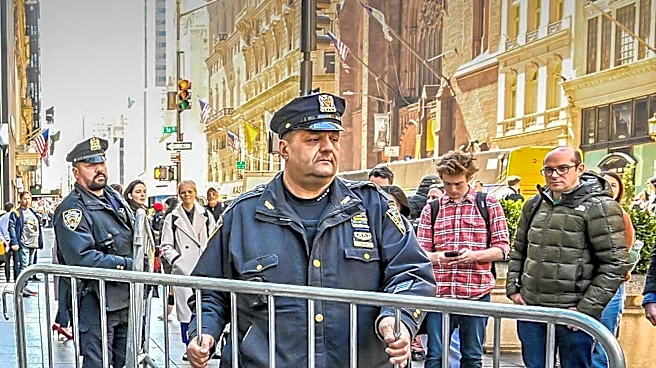
Police Department (NYPD) to revise its radio encryption policy. In a November 4 letter to New York City Council Member Gale A. Brewer and supplemental comments to the NYPD, the coalition acknowledged some improvements, such as the reduction of a proposed one-hour delay to 30 minutes for accessing police radio communications. However, they emphasized that even a 30-minute delay could hinder journalists from effectively covering breaking news, emergencies, arrests, and other newsworthy incidents in real time. The organizations are advocating for credentialed journalists to receive access to police radio communications as promptly as technically feasible, highlighting its importance for independent reporting and journalist safety.
Why It's Important?
This issue is critical for maintaining transparency and accountability in public safety reporting. Delays in accessing police communications can significantly impede journalists' ability to provide timely and accurate information to the public, especially during rapidly unfolding events. The coalition argues that real-time access is essential for independent reporting, allowing journalists to document incidents as they happen and ensure public awareness. Without prompt access, there is a risk that the public may receive delayed or incomplete information, potentially affecting public trust and the ability of communities to respond effectively to emergencies. The proposed legislation, Int. No. 1025, which suggests a maximum 15-minute delay and automatic scanning capabilities, underscores the perceived urgency of this matter for journalistic operations.
What's Next?
The journalism coalition is requesting further revisions to the NYPD's policy, including a written explanation for any remaining delay and continued consultation with journalism organizations. They are also supporting Int. No. 1025, proposed legislation that would establish a maximum 15-minute delay for access to police radio communications and require automatic scanning capabilities. The organizations stress that this 15-minute limit should be a maximum, not a standard waiting period. Additional concerns raised include access to various radio channels, clear credentialing and appeals procedures, privacy protections for journalists, and operational testing before the system is fully implemented. The outcome of these discussions and legislative efforts will determine the future of how journalists cover public safety events in New York City.
Beyond the Headlines
The debate over NYPD radio encryption and journalistic access touches upon fundamental principles of press freedom and public information in a digital age. While law enforcement agencies often cite officer safety and operational security as reasons for encryption, journalists argue that these measures can inadvertently create barriers to transparency and public oversight. This situation highlights a broader tension between security concerns and the public's right to know, mediated by the role of the press. The resolution of this issue in New York City could set a precedent for other municipalities considering similar encryption policies, influencing how breaking news is reported and how communities are informed about critical events across the nation.