

What's Happening?
NASA has reported a significant expansion of the sargassum belt in the Atlantic Ocean, marking June 2026 as a record month for the presence of this seaweed. The sargassum belt, which stretches from Africa to the Gulf of Mexico, has reached one of its
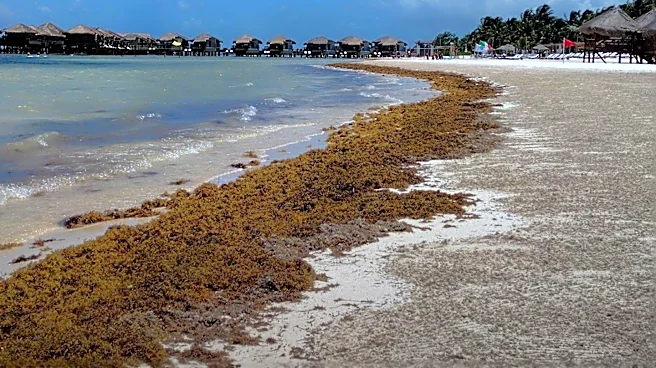
largest recorded sizes, affecting ecosystems and tourism in the Caribbean and Gulf regions. The University of South Florida collaborated with NASA to monitor this phenomenon, noting that the Caribbean and Gulf of Mexico have seen substantial increases in sargassum biomass. The belt serves as a habitat for marine life in open waters but poses environmental challenges when it accumulates on coastlines.
Why It's Important?
The expansion of the sargassum belt has significant ecological and economic implications. In open waters, sargassum provides habitat and food for marine species, but its accumulation on beaches can harm local ecosystems and deter tourism, a critical industry for Caribbean economies. The decomposition of sargassum releases hydrogen sulfide, which can cause environmental and health issues. The situation underscores the need for effective monitoring and management strategies to mitigate the impact on affected regions. The data from NASA's satellite monitoring is crucial for predicting and managing these impacts.
What's Next?
Continued satellite monitoring by NASA and the University of South Florida will be essential in tracking the sargassum belt's movements and density. This information will help local governments and communities prepare and respond to potential environmental and economic impacts. Efforts to develop sustainable management practices and technologies to address sargassum accumulation on coastlines are likely to intensify. The situation also highlights the broader challenges of climate change and ocean health, prompting further research and policy discussions.